
Brain, Mind & Consciousness Video Book
ABSTRACTS
Padma Shri Dr. B. N. Gangadhar
Chairman, National Medical Commission, New Delhi, India
Title: Yoga as a Spiritual Practice in Clinical Practice
Abstract: We are all inherently Divine. Not all of us, realise the strength of divinity. This strength offers immunity to the wear and tear stresses. It also promotes a sense of well-being. Transcending to realise this Divinity in us calls for proactive role from each one of us. The role includes practice of a spiritual lifestyle. The time-tested lifestyle is Yoga. Yoga helps us to harness the inner divine strength. The effects of such harnessing translate a person to be a socially proactive one. In turn, this progresses into creating a healthy and cohesive society.
In clinical practice, Yoga has been put to use to reduce disease burden in the individual and facilitate well-being. The role of Yoga in mental disorders is well established. Extensive research has confirmed its potential as therapy in different psychiatric disorders. Yoga not only offers clinical improvement, but also brings in changes in the biology. Such biological correlates of yoga therapy have further validated the role of Yoga in the treatment of psychiatric disorders. There is a need to integrate yoga in mainstream clinical services. The application of yoga in psychiatric disorders deserves to be monetised through insurance mechanism. All stakeholders should work towards this end so that the treatment is reachable to each individual.
Prof. Harald Walach
K S University, Vilnius, Lithuania
Title: A Place for Spirituality and Healing in Medicine
Abstract: Modern medicine has developed along the metaphor introduced by René Descartes in 1644: It is regarding the human organism as a machine. With cellular pathology introduced by the German physician and politician Rudolf Virchow around 1848 this metaphor became the central dogma of medicine about 200 years later. With the insight into the biochemical machinery and genetics in our times this view of man has been codified for good and defines today how we see man and his diseases, as well as the options for therapy. This focus on the material basis of health and disease is deficient and deceptive in various ways. Although it might be helpful in most cases of acute diseases, such as infectious diseases, accidents and life-threatening conditions, it is less than optimal in all chronic conditions, as it neglects the fact that the organism is a self-regulating and autopoietic system which creates both healthy and diseased states.
Here, regulation therapies might be more appropriate, as offered by traditional and complementary therapies, such as homeopathy, Ayurveda or naturopathy. Finally, the purely materialistic outlook of the modern medical stance neglects consciousness and spirituality. Consciousness as a human reality is not derivable from the purely material basis of the brain, and the spiritual nature of man might even demand a deeper analysis. Hence, in many cases, a culture of consciousness, as presented in various spiritual paths might be not only helpful but also necessary for a holistic view of health and disease. In the same vein, a deeper contact with man’s spiritual nature could be essential for healing in some cases. I will discuss the interrelatedness of these different perspectives and options for therapy.
Dr. Wayne Jonas
Professor of Medicine, Georgetown University, USA
Title: Meaning, Mindfulness and Spirituality: Core Dimensions for Healing
Abstract: Ultimately, all human beings want three basic things out of life: first is health, second is well-being/happiness, and third is a sense of meaning and purpose, creating value beyond themselves as individuals. If any of these wants are lacking, people suffer, either through a broken body, a lack of peace, or a sense of emptiness. Over 70 years ago Abraham Maslow wrote about the Hierarchy of Human Needs, which included three domains: physical needs, psychosocial needs, and finally, spiritual needs, which he called self-actualization and in his final model, self-transcendence.
In this talk, I will update these domains showing them as a circle (rather than a hierarchy) and illustrating how through their intersecting synergism, wholeness of a person emerges when meaning and the spiritual domains are placed at the center of care. I will illustrate the practical implications of this view of humanity for health care with a set of tools called the Healing-Oriented Practices and Environments (HOPE) Note Toolkit. At the heart of this approach, is asking the patient “what matters” to them as a person and working with them to identify their deepest response.
Bringing meaning, purpose and spirituality into clinical practice simply means having this discussion about what matters with patients, then listening to them mindfully, and following where the response takes them. This is the process of whole person care for healing.
Dr. Andrew Newberg
Thomas Jefferson University Hospital, Philadelphia, USA
Title: Principles of Neurotheology: Implications for the study of Consciousness
Abstract: This presentation will review the current approaches towards research and scholarship taken by the field of neurotheology. This field seeks to understand the relationship between the brain and religious/spiritual experiences. Many of these experiences include changes in consciousness such as mystical or trance states. Thus, neurotheology is an appropriate field for understanding how consciousness, the mind, and brain intersect. This presentation also reviews current research and implications of neurotheology for understanding consciousness and the brain.
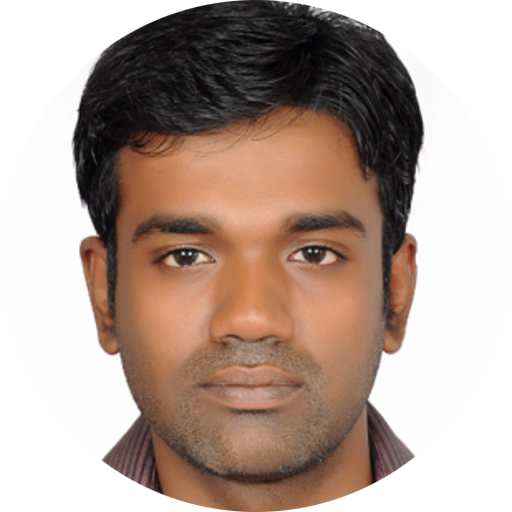
Prof. Madhavan Chandran
Associate Professor, Physiology, AIIMS Kalyani, India
Title: Can the Mind Relax, Consciously?
Abstract: The human mind is constantly engaged in processing sensory input and coordinating thoughts and actions, rarely getting a chance to fully relax. However, research suggests that specific musical stimuli, such as the Indian classical raga Bhimpalasi, may induce a state of conscious relaxation in the brain. A recent randomized controlled trial investigated the effects of listening to Bhimpalasi on EEG power spectra in 72 healthy adults. Participants were divided into a control group (silence) and an intervention group (listening to Bhimpalasi).
EEG data was recorded before, during, and after the 10-minute music intervention. Power spectral analysis examined changes in delta, theta, alpha, beta, and gamma frequency bands. While overall changes in delta and alpha power were not statistically significant between groups, the intervention group exhibited localized increases in alpha power at electrodes corresponding to the temporal and occipital lobes. This effect persisted for up to 5 minutes post-stimulus, suggesting that specific musical stimuli can modulate brain activity, promoting a state of relaxation and focused attention. These findings support the hypothesis that certain ragas can induce conscious relaxation and have implications for the development of music-based interventions for stress reduction and mental well-being. Further research should explore the long-term effects and therapeutic potential of raga-based music interventions.
Ref: Short term student Project of Ritesh Pandey MBBS 2021-22 Batch AIIMS Kalyani approved by ICMR conducted in Department of Physiology under the supervision of Dr. Madhavan C Associate Professor Physiology.

Dr. Sukanto Sarkar
HOD, Psychiatry, AIIMS Kalyani, India
Title: Neuroplasticity, Mind and Divine
Abstract: Neuroplasticity is the brain’s ability to rewire itself by constantly adapting to the environment and experiences. For effective neuroplasticity to occur, the brain must be stimulated to newer experiences and environment also known as “Enriched Environment.” These experiences can be linked to our mental state and spiritual engagement, thus allowing individuals to cultivate a deeper connection with the divine consciousness through the practice of meditation, mindfulness, positive affirmation, and religious practices, leading to a more spiritual outlook of life. This will create rewiring of the neural pathways, increased dendritic connections, enhance neural cross-talks thus stimulating the neuroplastic changes of the brain. Thus, by consciously focusing on cultivating a connection with the divine, individual can elevate one’s mental state which can potentially trigger neuroplastic changes in the brain. Neuroplastic changes plays a critical role in enhancement of cognitive abilities, delaying age related cognitive decline and increase ability to adapt and recover from physical and mental trauma of the brain. The divine connections of the mind through spiritual and religious practices will stimulate the higher consciousness thus bring about neuroplastic changes in the brain.

Sri. Varun Agarwal
Director, Bhaktivedanta Institute, Kolkata, India; Alumnus, IIT Kanpur, India
Title: Brain & Mind – Exploring the Foundations of Science and Medical Challenges
Abstract: What is mind? Is it different from brain or just an epiphenomenon of brain? If it is different, how they interact and which came first? In other words, is brain a product of thought or thoughts are product of brain? These questions have perplexed scholars from all times and they all lie at the heart of science and spirituality interface. Interestingly, the challenges faced in the foundations of quantum physics in the last century as well as various recent developments and challenges faced in neuroscience can help us to explore these perennial questions and provide some hints. Gathering insights from the foundations of quantum physics as well as renowned neuroscientists, the author will attempt to present a brief overview of the subject and explore some of these intriguing questions. An attempt will also be made to have a glimpse from ancient Vedantic wisdom about these thought-provoking questions of mind and consciousness.

Sri. Vasudeva Rao
President, Bhaktivedanta Institute, Kolkata, India; Alumnus, IIT Kanpur, India
Title: Science of Mind for Mental Well-being: A Vedantic Approach
Abstract: It is time to take mental wellness seriously which is affecting all sections of society including the youth. Neuroscience has made significant progress in understanding the role of brain and develop medicines to help various mental conditions. In order to make them fully effective, we need to augment them with the traditional techniques of yoga and meditation that offer similar relief in some conditions like stress, anxiety and depression. Ancient Indian traditions, especially Vedanta, have excellent models of consciousness and life. They have identified fundamental categories of mental processes, namely mental, intellectual, emotional, and identity. We need to use thought experiments to understand the mind. The mental processes stated above can be observed while one plays a computer simulated game. In this talk, we will present an ancient Indian model of consciousness using the example of a computer game. We will attempt to explain the concepts of consciousness (Chetana), mind (manah), intelligence (buddhi), identity (ahankara) and their interconnected role in sustaining life in this universe. Since mind is not an isolated entity according to Vedanta, we need to understand, what mind is, how it operates and how to tune it in relation to the other connected processes. Such an understanding can help us in our research to improve mental wellbeing, in exploring the depths of our mind and its implications for personal growth and societal change, and would bring a meaning and purpose to our life in this vast cosmos.
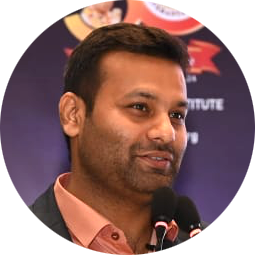
Dr. Roshan Tiwari
Research Scholar, Bhaktivedanta Institute, Kolkata, India; Alumnus, IISER Kolkata, India
Title: Privacy of Conscious Experience: A Quantum Information Approach
Abstract: The observation of the natural world generates unique conscious experiences in living beings, characterized by their inherently personal, subjective, and first-person nature. These experiences, often referred to as qualia, are fundamentally inaccessible from an objective or third-person perspective, as their qualitative aspects cannot be adequately captured or transmitted through classical bits of information. Emerging research suggests that such experiences may be rooted in quantum information, which, like consciousness, remains intrinsically unobservable and incommunicable. This limitation arises from fundamental principles of quantum information theory, particularly the No-Cloning Theorem, which prohibits the perfect duplication of arbitrary quantum states, and Holevo’s Theorem, which restricts the amount of classical information that can be extracted from quantum systems. In my talk, I will present the argument that conscious experiences are quantum in nature, drawing on these theorems to support the proposed framework.