
Summer School 2026
ABSTRACTS

Prof. Renato Renner
ETH Zurich, Switzerland
Title: The Limits of Objective Reality
Abstract: A famous thought experiment from quantum foundations, known as the Wigner’s Friend paradox, exemplifies a tension between the perspectives of two different observers of the same quantum experiment: an internal observer (the Friend), who measures a system while enclosed in an isolated laboratory, and an external observer (Wigner), who models the entire laboratory, including the Friend, as a closed system evolving reversibly.
I present an extended version of this thought experiment and explain how it leads to a no-go theorem, showing that the perspectives of different observers (such as the Friend and Wigner) cannot always be consistently combined into a single objective description of what is “real”. I then argue that this insight from quantum foundations suggests a new way to resolve puzzles in quantum gravity, including the Black Hole Firewall Paradox.

Prof. Vlatko Vedral
University of Oxford, UK
Title: Portals to A New Reality: Five Experiments to Unlock the Future of Physics
Abstract: In my talk, I will argue that we are on the brink of a new revolution in physics. I will describe a number of key thought experiments that test the foundations of physics, namely the interface between quantum physics and general relativity and the role quantum physics might play in the macroscopic domain. Some of the thought experiments aim to test how quantum physics alters the concepts of space and time that are fundamental to understanding general relativity, while others explore how the key principle of general relativity — the so-called equivalence principle — could impact quantum physics and lead to its modification. They are all underpinned by our understanding of what quantum physics is telling us about reality and how it applies to macroscopic objects. Our rapid development of quantum technologies has now put us within reach of performing these experiments and rewriting our understanding of the Universe.
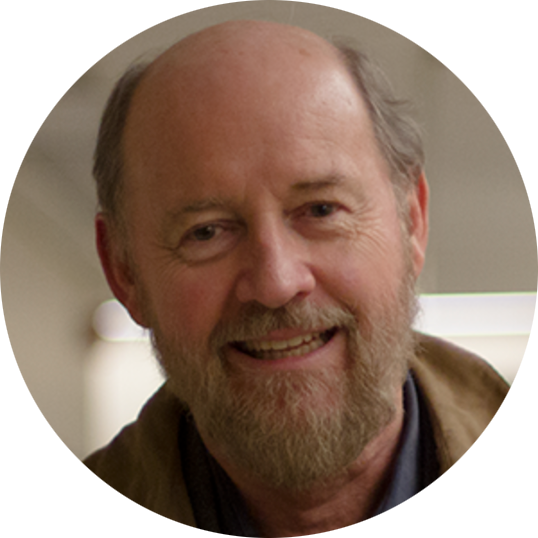
Prof. James R. Brown
University of Toronto, Canada
Title: What Do We See in a Thought Experiment?
Abstract: What do we see in a thought experiment? The question is disarmingly simple but quickly becomes perplexing when we try to give an answer. The analogous question for real experiments is easy: We see objects and processes such as: streaks in a cloud chamber, the height of a column of mercury, the changing colour in a chemical reaction, and so on. Even acknowledging the theory-ladeness of observation, the objects of perception in a real experiment are unproblematic. We might be tempted to say the same about thought experiments, given that they are so similar to real experiments. In both we set things up, let them run, then we see what happens, and we finish by drawing a few morals. The only difference it would seem is that a thought experiment is done in the imagination. The right answer is vastly more complicated. And even though thought experiments are a common tool for philosophers and physicists alike, we still do not fully understand them or how they work.

Prof. Abhas K. Mitra
Bhabha Atomic Research Centre, India
Title: Role of Critical Thinking in the Progress of Physics
Abstract: Physics is about understanding the secrets of the physical world by means of physical experiences, observations and experimentations. However, at any given epoch, there are limitations on the actual experimentations and even most advance experiments may not always lead to expected results. For instance, over past 60 years cosmologists believe that most of the matter content of the universe is different from ordinary matters composed of electrons, protons and neutrons. Such hypothesized matter is called “Dark Matter” as it eludes any direct electromagnetic detection. But despite most advanced global scale experimentations over past 30 years, no dark matter has been detected.
And indeed, physics has occasionally taken big leaps by means of thought experiments in lieu of actual experiments. The key element behind thought experiments is the power of original thinking. However, this speaker is not an experimental physicist. And having discussed few of the well-known thought experiments, this speaker will liberty of deviating to the topic of critical thinking related to his own research. For instance, when the entire world thought that Ultra-High Energy (UHE) cosmic gamma rays, supposedly detected from the famous X-ray binary Cygnus X-3 must be due to Proton + Proton → Neutral Pion → Gamma Rays, this speaker proposed a different mechanism: proton + X-ray photon → Pion → Gamma rays.
When almost all astrophysicists believe that the so-called astrophysical Black Holes are vacuum mathematical black holes except for a singular point, the present speaker felt that existence of true black holes may violate a basic pillar of Einstein’s General Relativity, and hence the so-called black holes are likely to be non-singular ultra-dense balls of plasma.
Since 1991, cosmologists believe that most of the energy component of the universe is not derived from the mass-energy of ordinary matter and dark matter, but a mysterious repulsive energy called Dark Energy. However, there has not been any direct confirmation or detection of this mysterious dark energy in 45 years. And 15 years ago, from purely theoretical consistency considerations, this author argued that Dark Energy may not be real, and, on the other hand, an artifact of explaining a highly complex inhomogeneous and lumpy universe with an over-simplified model.
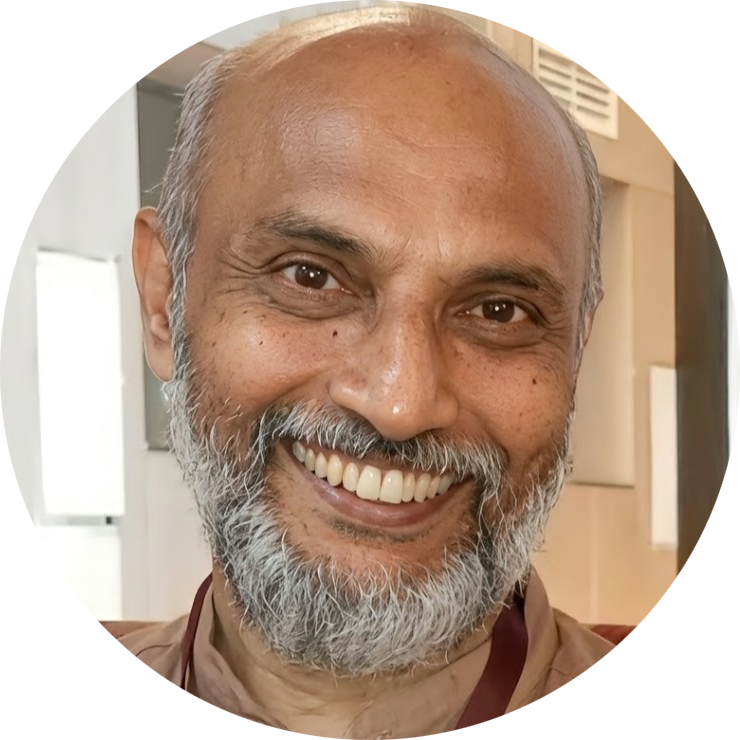
Prof. C. S. Aravinda
TIFR Bengaluru, India
Title: Curvature: Concept, and Its Overtones
Abstract: In this elementary talk, we explore the notion of curvature used in rigorous mathematical discipline through its more accessible discrete version that effectively conveys the concept’s smooth transition from intuition to rigour. All through the talk, the emphasis will be on capturing the essence of this notion from a historical perspective, through certain overtones drawn from nature, literature and through illuminating pictures. The underlying thought process is both to gain an informed understanding of this most important notion in relatable dimensions 1 and 2, and to discern how brilliantly nature sorts out some of the subtle notions involved, with remarkable clarity and innate beauty.

Prof. A. K. Mukhopadhyay
AIIMS New Delhi, India
Title: The Architecture and the Design of Thought Experiment
Abstract: With the rise of post-materialistic science, the ‘Thought Experiment’ is becoming a handy tool for scientists. My approach to the subject for this seminar is linguistic. The subject matter has two components: Thought and Experiment. The Architecture of thought is multidisciplinary, interdisciplinary and transdisciplinary. It involves the disciplines of Information science, Neurology, Psychology, Cognitive science, and Spatial or Cosmological science. Cosmology bestows it with openness. Designing the experiment with Thoughts is based, as convention, on very specific research questions, a one-sentence tight research hypothesis, a well-articulated aim, with clear objectives of the experiment. Methodology is subjective, and the verification is done by intersubjective concurrence. The only material used in the experiment is a well-formulated ‘Thought’, which is a very powerful dynamic entity. The only equipment used in this experiment is an evolved human brain with dual characteristics, Openness and Integrity. The openness of the brain is required to different depths of nature, namely, classical nest, quantum nest, subquantum nest, sub-subquantum nest of nature, and finally to unconditional consciousness. The brain requires multilevel integrity, namely, classical integrity, quantum integrity, phenomenological integrity, and integrity for conduciveness to the nascent nature or Mother Nature. It is such a conducive brain, which makes the Unknown imagined, Imagined intelligible, Intelligible possible, Possible verifiable, and the Verifiable verified. The brain is thus the transmissive chokepoint, condensing the Infinity into verified. Thought experiment, thus, is sporting. Like sports persons, the experiment needs to be designed with the spirit of ‘Fitness’ (determined by ethics) and ‘Form’ (Aesthetics), ensuring lean management with Ockham’s razor. Setting the ‘Standard’ and using appropriate ‘Control’, Quality Assurance in the Thought Experiment ensures reliable report cards.

Prof. Ramesh K. Mishra
University of Hyderabad, India
Title: Multilingualism, Self, and Consciousness: Towards a Theory of Diversity-Induced Modulation of Self
Abstract: While the human brain has evolutionarily equipped itself to learn and use multiple languages with remarkable computational efficiency, the last five decades of research in this domain have missed a critical link, that is, how the very desire and ability to speak multiple languages and develop expertise in them, influences agency and self. Interestingly, philosophers also have paid limited attention to multilingualism per se, despite philosophy of language remaining a dominant intellectual tradition for centuries. In this context, it makes practical sense to ask a foundational question about how people experience different modes of self as they speak different languages, to different interlocutors, in different social contexts, across cultural boundaries.
Evidence suggests, people who speak many languages can develop different moral stance. Multilingualism also influences core cognitive processes such as attention while contributing to social relationships and economic prosperity. However these reasons are insufficient to remain satisfied when we still do not know how the agent who claims to be a multilingual, experiences variations in the self as he practices multilingualism. I bring my recent thinking to question this and introduce the concept of diversity induced modulation of self as particularly relevant to the Indian context. In this talk, I shall explore how multilingual and multicultural practices may shape experiences of different selves across specific temporal and social contexts. My attempt will be to theoretically present this thinking while grounding it to current research by others and proposing empirical possibilities. Further, re-visiting the Hard Problem of consciousness, as discussed more recently by Pohl and colleagues (2026), creates a possibility to link, experimental neuroscience, cognitive science, cognitive psychology, and philosophy of language and mind to evolutionarily answer a fundamental question. This way of looking at the dynamic evolutionary interaction of minds, society, and cultures, crowns scientific thinking in cognitive science to those concepts, such as consciousness and self, that have remained elusive.
Prof. Sandeep Kumar
IIT (BHU) Varanasi, India
Title: Bridging Higher-Dimensional Mathematics and Vedantic Thought
Abstract: The functioning of the Universe is inherently complex, yet it is often interpreted through simplified conceptual and mathematical models. For any such model to be meaningful, it must be grounded in logical consistency and explanatory coherence. Human beings, in their pursuit of understanding and progress, similarly rely on conceptual frameworks or “models” for guidance in life. Religious and philosophical traditions, including various interpretations of Dharma, have historically offered comprehensive models to explain the nature and origin of the Universe.
A model that closely approximates the structure and behaviour of the real Universe holds significant value, both scientifically and philosophically. While initial understanding is often built upon simplified representations, continuous refinement toward greater accuracy remains essential. Across disciplines, both theistic and non-theistic perspectives have proposed logical and mathematical frameworks to explain cosmic creation and structure. In particular, axiomatic approaches to fields and space—especially in higher-dimensional contexts—offer promising avenues for theoretical exploration, even when direct experimental verification is not feasible.
This presentation explores potential parallels between the philosophical insights of Vedanta and modern mathematical concepts related to higher-dimensional spaces. By examining these intersections, the work aims to contribute to the ongoing effort to develop a more comprehensive and logically consistent model of the Universe that bridges abstract mathematics and philosophical inquiry.

Prof. Ramagopal Uppaluri
IIT Guwahati, India
Title: Thought Experiments in Chemical Engineering
Abstract: Chemical engineering and associated sciences delve deeper into the boundaries of the transformation of raw materials into useful products. To do so, unit processes and unit operations are to be followed through the objectively defined process flow diagrams. Invariably, chemical engineering involves the integration of the finer principles of fluid mechanics, heat transfer, thermodynamics, mass transfer and reaction engineering. Alongside, process integration and process systems engineering is duly followed to gain useful understanding into the possibilities to get beyond the boundaries.
Thought experiments aim to go beyond the conventional thoughts and hypothesis that are often validated in chemical engineering practice. Fundamental entities such as viscosity, diffusion, reaction rates etc., are envisaged to an ideal scenario, which is rather difficult to achieve. Often serendipity in experimental schemes as well alter the very direction in which such customized thinking is often adopted and envisaged.
In the presentation, a summary of various thought experiments in chemical engineering disciplines will be discussed. Notable among these are as follows. In the field of fluid mechanics, feasibility of infinite and zero viscosity, Reynolds number, perfect and no slip wall can be seen as important thought experiments that convey the limitations of the reality that we can imagine. In the field of mass transfer, zero and infinite diffusion, zero and infinite convection, zero and infinite interfacial mass transfer resistance, limits of simultaneous mass transfer with chemical reaction, diffusion limited vs. kinetics limited processes enable to understand that the reality of chemical processing does have limits. In the field of reaction engineering, the implications of infinite reaction rate, perfect/no mixing, run way reaction, infinite recycle of a reactor do convey very useful insights into the reactive transformations and associated limitation in the reality. In the field of thermodynamics, the third law of thermodynamics is a classical example of the thought experiments. Along with this, perfectly reversible system, dead universe with maximum entropy, time-entropy arrows do convey philosophically the nature of the reality in which we reside in this phenomenal world. In the process systems engineering, zero waste producing chemical plants and optimization with mathematical / AI-ML modelling tools and their limitations can be analyzed to useful to understand deep the reality. In summary, the cited examples do convey the inevitability of thought experiments in chemical engineering and as well convey philosophically the reality of matter i.e., matter and its transformations are restricted to a certain limit and thought experiments do demonstrate such limits, even though in principle the thought experiment cannot be realized in practice.

Dr. Jaynarayan T. Tudu
IIT Tirupati, India
Title: A Thought-Experiment and Experiential Approach to Discerning Consciousness and Its Counterfeit
Abstract: We will present a set of thought experiments to address what may be called as the not-so-hard problem of consciousness. While the classical hard problem of consciousness concerns the subjective nature of experience, the not-so-hard problem concerns the difficulty of differentiating genuine consciousness from its artificial or counterfeit appearance.
With the rapid progress of artificial intelligence, the human ability to discern real consciousness from its imitation is becoming increasingly blurred. Modern AI systems, many of which are inspired by brain-like models, have become powerful in generating intelligent responses, solving complex tasks, and outperforming humans in several well-defined domains. However, such intelligence is largely confined to domains where sufficient training data is available in describable and computable forms. Alan Turing, in his 1950 paper Computing Machinery and Intelligence, proposed the famous imitation game to examine the question of machine intelligence through a query-response framework. Even today, Turing-like tests remain relevant for comparing advanced AI systems with expert human beings. However, the increasing sophistication of AI systems raises a deeper concern: whether a sufficiently intelligent machine may appear to exhibit conscious phenomena under certain constraints.
In this work, we formulate this observation as the not-so-hard problem of consciousness: how can one distinguish genuine consciousness from counterfeit consciousness? We address this question through a set of thought experiments designed using the principles of Vedantic spiritual wisdom, with the aim of developing a framework to discern between the reality of consciousness and its artificial imitation.

Dr. Dheeraj K. Dube
IIT Mandi, India
Title: Thought Experiments and Molecular Reality: From In Vivo Observation to In Silico Exploration
Abstract: Scientific understanding of biological systems has evolved through complementary modes of investigation. In vivo studies allow observation of biological phenomena within living organisms, preserving the complexity and emergent behavior of life itself. In vitro approaches isolate specific components of living systems into controlled chemical environments, enabling focused investigation of molecular and biochemical processes. Extending this progression further, in silico methodologies such as molecular dynamics simulations create computational representations of molecular systems, where proteins, nucleic acids, membranes, drugs, and other biomolecular players can be visualized and studied with atomic-level detail under carefully controlled theoretical conditions.
In this sense, computational biology and molecular simulations represent an advanced form of scientific thought experimentation. Before a molecular mechanism is experimentally verified, it is often first imagined, modeled, visualized, and computationally explored. Molecular dynamics therefore acts not merely as a numerical tool, but as a dynamic realization of scientific imagination, allowing researchers to investigate interactions, conformational changes, and mechanistic possibilities that may remain inaccessible through direct experimentation alone. Modern biological research increasingly depends on this interplay between experimental observation and computational thought-based exploration for deeper mechanistic understanding.
This relationship between conceptualization and manifestation also finds striking resonance within the Vedantic and Sāṅkhya knowledge traditions, where creation itself is understood to emerge first at the level of consciousness or mind before appearing in material form. Every technological invention, scientific model, or experimental design must first exist as an idea before becoming physically realized. Similarly, computational experiments occupy an intermediate space between thought and physical experimentation, transforming abstract conceptualizations into structured scientific inquiry. The convergence of modern computational biology with these philosophical perspectives highlights the profound role of thought experiments in both scientific discovery and human creativity.

Dr. Sai Phani K. Vangala
IISER Bhopal, India
Title: Thoughts on Chemical Origin of Life Research: Trends from a Computational Perspective
Abstract: The origin of life is thought to have emerged through the gradual chemical evolution of simple molecules present in the primitive Earth’s atmosphere and oceans into increasingly complex molecular systems. Prior to the appearance of the first unicellular organisms, the early Earth environment was rich in fundamentally chemical constituents such as water, nitrogen, ammonia, carbon dioxide, oxygen-containing species, and phosphorus compounds. Through a series of prebiotic chemical transformations, these simple precursors are believed to have given rise to essential biopolymers, including RNA, DNA, proteins, and carbohydrates, ultimately paving the way for the emergence of life.
In this talk, we focus on the formation of biopolymers, with particular emphasis on the synthesis of RNA from its fundamental building blocks — phosphate groups (phosphoric acid), ribose sugars, and nucleobases/nucleotides. Using advanced computational approaches, we investigate the thermodynamic feasibility of RNA formation and compare it with alternative structural and reaction pathways. Although numerous simulation studies have explored various aspects of the chemical origin of life, the integrated application of classical molecular dynamics (MD) and ab initio density functional theory (DFT) to probe RNA formation remains relatively unexplored. In addition, this talk provides insights into recent advances in origin-of-life research, highlighting key developments and relevant literature in the field.

Dr. Manas C. Mishra
KIIT University, India
Title: The Geotechnique Quandary: Memory, Entanglement and the Myth of the Undisturbed
Abstract: Traditional understanding of geotechniques assumes soil to be an inert, passive, even “dead” particulate matter. Further, it is scientifically established that soil behaviour can be understood leading to prediction of failures and catastrophes with dependable accuracy. This discussion, however, attempts to reason that the very fundamental of “undisturbed sampling” is a structural contradiction. The concept of undisturbed sample and its extraction presents an ontological debate, making it the equivalent of Heisenberg Uncertainty in geotechnology. Central to this argument is the notion that the same electrochemistry with the same boundary/loading conditions on a mass of soil exhibits different behaviour, which might be due to the retention of its geoenvironmental “trauma” with an adaptive memory and an interactive inter-particle sunyata or void.
Considering an example of a highly reactive and challenging industrial waste such as red mud, this discussion further emphasizes the role of an “Observer” in addition to the experiences the matter goes through in determining its potential. In order to explore the possibilities, geospatial entanglement of red mud is discussed across vast temporal as well as spatial scales in addition to its silent cascading effects. A geotechnical engineer can thus be considered as a modern Wigner’s friend whose prediction may actually be an architect of soil’s future and the interventions may be the instruments in converting remote and random risks into certain reality. This discussion intends to steer modern soil mechanics towards entangled physics, epistemology and temporal reality.
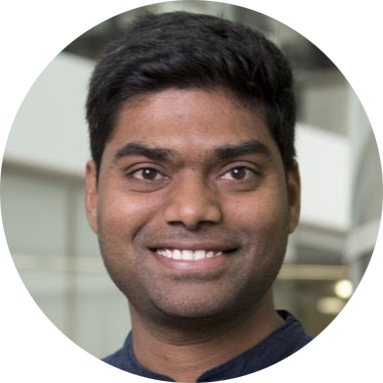
Dr. Srikanth Chandragiri
Helmholtz Munich, Germany
Title: Consciousness Beyond DNA: Insights from Twins and Human Cloning
Abstract: Advances in genetics and neuroscience have illuminated the molecular basis of development, cognition, and behavior, yet the fundamental nature of consciousness remains unresolved. Subjective first-person awareness and the lived experience of being a self, continues to resist reduction to purely physical mechanisms. Monozygotic twins provide a striking case study: despite identical genomes, they develop distinct personalities, preferences, and independent streams of conscious experience. Genetic identity alone therefore appears insufficient to explain individuality at the level of subjective awareness.
Cloning further sharpens this question. A genetically identical clone may reproduce the biological structure of an organism, but it does not inherit the donor’s conscious identity, memories, or subjective continuity. This distinction between biological replication and experiential individuality raises a central issue: can consciousness be copied in the same way as DNA, or does it represent a principle irreducible to physical structure?
This presentation examines evidence from twin studies, epigenetics, developmental neuroscience, and cloning biology to probe the limits of current scientific understandings. Epigenetic divergence, environmental variation, stochastic neural development, and nonlinear plasticity explain many differences among genetically identical individuals. Yet these mechanisms do not resolve why physically similar brains correspond to distinct centers of subjective experience. The persistence of experiential individuality underscores an explanatory gap between neural correlates of consciousness and consciousness itself.
Engaging contemporary debates in philosophy of mind — including the “hard problem” of consciousness, emergence theories, and Integrated Information Theory — the discussion considers thought experiments involving perfect genetic or neural duplication. These challenge the assumption that consciousness can be replicated like biological information. Drawing from both scientific discourse and Vedantic philosophy, this work proposes that DNA and neural systems serve as interfaces for consciousness rather than its ultimate source. Twins and clones thus become critical models for exploring whether individuality and conscious identity transcend material explanation.
Dr. Roshan Tiwari
Alumnus, IISER Kolkata, India
Title: The Sealed Universe Laboratory: A Thought Experiment on Exogenous Variables, Causality and Conscious Choice
Abstract: My talk will introduce The Sealed Universe Laboratory, a thought experiment designed to explore Bell’s idea of “exogenous variables” and what it really means for a choice to be genuinely independent. Imagine a perfectly sealed laboratory floating in space, completely isolated from the outside world. Inside the laboratory, everything starting from quantum random number generators, AI systems, human brains, and Bell experiments, evolves only according to the physical laws and initial conditions within the box. To the scientists inside, many events appear random and unpredictable. Yet from the perspective of an outside superobserver, every event inside the laboratory still belongs to one continuous causal chain. Even the outputs of quantum random number generators remain part of the laboratory’s internal physical evolution.
The thought experiment then considers a different situation: an external conscious agent injects a measurement-setting bit into the sealed laboratory from outside the system. Unlike internally generated choices, this intervention does not arise from the laboratory’s prior physical state and therefore acts as a genuinely exogenous input. The experiment highlights the difference between events generated within a closed causal chain and interventions entering from outside it. This leads to a deeper question connected to Bell’s freedom-of-choice assumption: are conscious choices simply physical processes inside the universe, or can conscious agency introduce genuinely new causal origins into physical reality?

Shri Sushant Sharma
Alumnus, IIT Guwahati, India
Title: Computation and Awareness
Abstract: When exploring the differentiation between awareness and computation, it is pertinent to bring up the Chinese Room argument, and the Halting Problem. By contemplating these thought experiments, one delves into the philosophical inquiries surrounding whether mere computational processes can truly equate to genuine understanding and consciousness.
In the Chinese room thought experiment, proposed by philosopher John Searle, Searle asks us to imagine a person who does not understand Chinese, sitting in a room with a rulebook and a set of Chinese symbols. This person receives Chinese questions from outside the room, follows the instructions in the rulebook to manipulate the symbols, and produces appropriate Chinese responses. Despite the person in the room not understanding Chinese, the responses might appear to an outside observer as if they were generated by someone who comprehends the language. Searle’s argument is often used to question the idea that a computer or any other computational system, no matter how advanced, can truly understand or possess consciousness. He argues that even if a computer can simulate human-like responses through computation, it does not inherently understand the meaning of the information it processes.
The Halting Problem, introduced by Alan Turing, is a mathematical problem that questions whether a general algorithm can determine, for any arbitrary input and program, whether the program will eventually halt or run indefinitely. Turing’s proof demonstrates that there cannot be a universal algorithm that solves the Halting Problem for all possible cases, suggesting inherent limitations in what computation can achieve.
A famous example of an undecidable problem is Goldbach Conjecture. The conjecture states: “Every even integer greater than 2 can be expressed as the sum of two prime numbers.” Despite being tested extensively for vast ranges of even numbers, the Goldbach Conjecture remains unproven, and its verification for all even integers is an open problem in mathematics.
When considering awareness as the central theme, the connection can be drawn in how both the Chinese Room argument and the Halting Problem underscore the challenges in achieving a comprehensive, self-aware system through computation alone. They contribute to the ongoing dialogue about the nature of consciousness and the inherent constraints faced by computational models when it comes to replicating human-like awareness.

Shri Prabhakar Ballapalle
Western Digital, Bangalore, India
Title: Can Simulation Be Experience? A Computational Thought Experiment on Consciousness
Abstract: Understanding whether consciousness arises purely from physical processes or requires additional non-computational properties remains a central challenge in the study of mind and intelligence. This paper introduces a novel thought experiment, the Firmware Consciousness Emulator, to examine whether consciousness can be fully realised through perfect computational simulation. The experiment considers a hypothetical system capable of replicating every neural state and transition within the human brain, ensuring identical input–output behaviour and memory evolution.
By comparing a biological brain (System A) with an exact computational simulation (System B), the framework isolates a fundamental question: whether functional equivalence implies conscious equivalence. If the simulated system exhibits consciousness, this supports computational or functionalist accounts, suggesting that consciousness emerges solely from information processing and causal structure. Conversely, if consciousness is absent despite perfect replication, this implies the existence of non-computational or substrate-dependent properties essential to conscious experience.
The thought experiment highlights a critical distinction between behavioural indistinguishability and subjective experience. Even under conditions of perfect simulation, external observation cannot resolve whether conscious awareness is present, thereby exposing limitations in empirical verification of consciousness. This leads to a deeper conceptual gap between objective descriptions of system behaviour and the subjective “what-it-is-like” aspect of experience.

Shri Vasudeva Rao
Alumnus, IIT Kanpur, India
Title: Reimagining the Observer: Indian Knowledge Systems as Frameworks for Modern Thought Experiments in Consciousness
Abstract: Modern physics and cognitive science are increasingly confronting the limits of objective, reductionistic paradigms, particularly when addressing the “Hard Problem” of consciousness. While historical thought experiments by figures like Einstein and Schrödinger have successfully probed the boundaries of physical laws, they consistently reach an impasse when dealing with the role of the conscious observer. This paper proposes a systematic integration of classical Indian Knowledge Systems (IKS), like the Sankhya dualistic framework, alongside the Pancha-Kosha model and non-dualistic Drig-Drishya Viveka, to expand the methodology of modern thought experiments.
Unlike Western philosophical traditions that treat thought experiments primarily as tools for testing logical consistency, IKS deploys them as rigorous, internal, experiential methodologies (Sadhana) to isolate and study consciousness. Sankhya philosophy provides a precise ontological classification by dividing reality into Prakriti (which encompasses all physical matter, energy, and subtle cognitive mechanisms like the mind and intellect) and Purusha (the non-material, fundamental witness consciousness). By categorizing cognitive processes as subtle configurations of matter, Sankhya cleanly segregates the observer from the observed. A simplified Sankhya is also described in Bhagavad-gita. The Drig-Drishya Viveka is a classical text of Advaita Vedanta, the non-dualistic school of Hindu philosophy. Its primary purpose is to establish the non-dual nature of reality by systematically discriminating between the Seer (the pure Subject/Consciousness) and the Seen (all objects, including the mind, senses, and body). This paper demonstrates how incorporating these ancient frameworks into modern scientific discourse provides a structured, verifiable classification for subjective experience, offering a path forward to transform consciousness from a scientific enigma into a fundamental parameter of reality.

Shri Varun Agarwal
Alumnus, IIT Kanpur, India
Title: Thought Experiments in Science and Spirituality: A Brief Overview
Abstract: Thought experiments have been an important part of scientific development. They help us to question our own theories, and thus contributing to progress further. They push us to challenge our own conceptions of reality and contemplate deeper about life and universe we live in. Many scholars, past and present, in various disciplines of science, philosophy, psychology and spirituality, have proposed wonderful thought experiments to explore the nature of consciousness, nature of space and time around us, and even on how to be a better person.
The current presentation will categorise thought experiments with examples. In addition, the author will attempt to propose a few novel thought experiments and also present a few glimpses from the ancient Vedantic wisdom. Mental laboratories, which scientists as well as spiritualists use to explore reality, can thus serve as a beautiful common ground for both. The presentation ends with a proposal for the synthesis of science and spirituality in our search for reality.