Carl E. Wieman is an American physicist and Nobel laureate renowned for his pioneering work in ultra-cold atomic physics and science education. Born in 1951, he made history in 1995 when, together with Eric Cornell, he created the world’s first Bose–Einstein condensate in a dilute gas of rubidium atoms—a groundbreaking achievement that earned them the 2001 Nobel Prize in Physics. Beyond his scientific contributions, Wieman has become a leading figure in improving STEM education worldwide. He founded the PhET Interactive Simulations project, promoted evidence-based teaching practices, and served as Associate Director for Science at the White House Office of Science and Technology Policy. Currently a professor emeritus at Stanford University, Wieman is admired both for advancing quantum physics and for transforming how science is taught and learned.
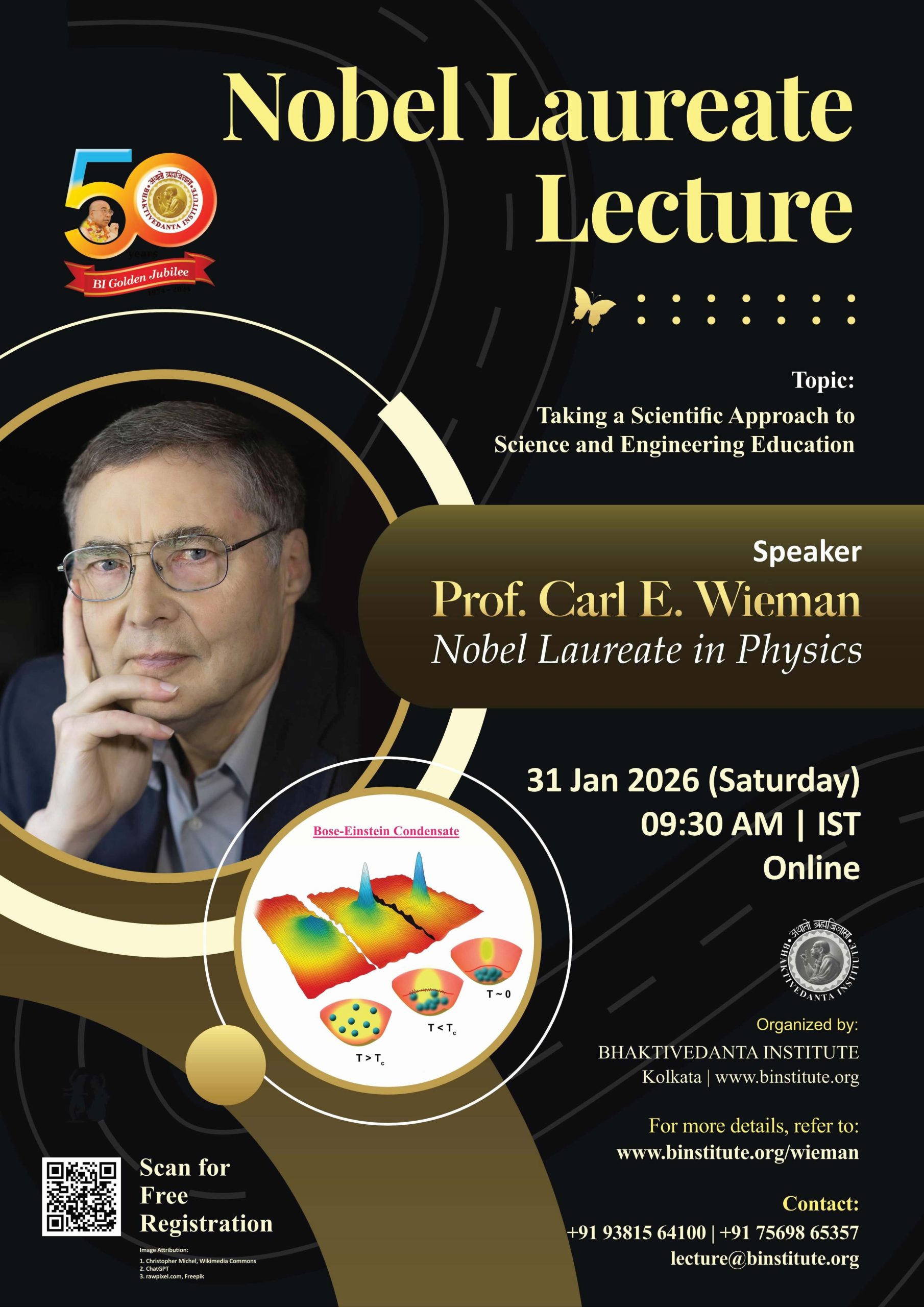
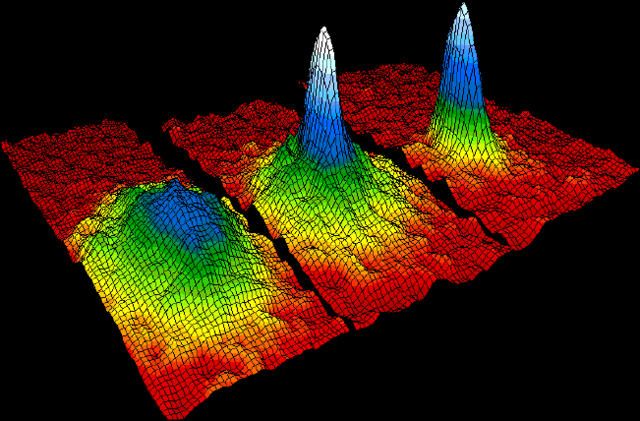
In 1995, Prof. Carl Wieman and Eric Cornell created the world’s first Bose–Einstein Condensate (BEC) using rubidium-87 atoms cooled to just 170 nanokelvin—a temperature unbelievably close to absolute zero. At such extreme cold, atoms lose their individual…
Prof. Carl Wieman played a key role in advancing laser cooling and magnetic trapping methods that made it possible to reach temperatures only billionths of a degree above absolute zero. These innovations allowed atoms to be slowed, confined, and manipulated with unprecedented…
After creating the first Bose–Einstein Condensate, Prof. Carl Wieman conducted groundbreaking experiments that revealed how atoms behave collectively in quantum states. By studying ultracold rubidium gases, his team observed…
Prof. Carl Wieman used ultracold atoms—notably those in Bose–Einstein condensates—to perform extremely precise measurements that test the limits of quantum theory and atomic physics. Because ultracold atoms move…
Prof. Carl Wieman revolutionized science education by applying the rigor of scientific research to the classroom. Instead of relying on traditional lectures, he conducted controlled, data-driven studies to understand how students actually learn…
A Bose-Einstein condensate was produced in a vapor of rubidium-87 atoms that was confined by magnetic fields and evaporatively cooled. The condensate fraction first appeared near a temperature of 170 nanokelvin and a number density of 2.5 × 10¹² per cubic centimeter and could be preserved for more than 15 seconds. Three primary signatures of Bose-Einstein condensation were seen…
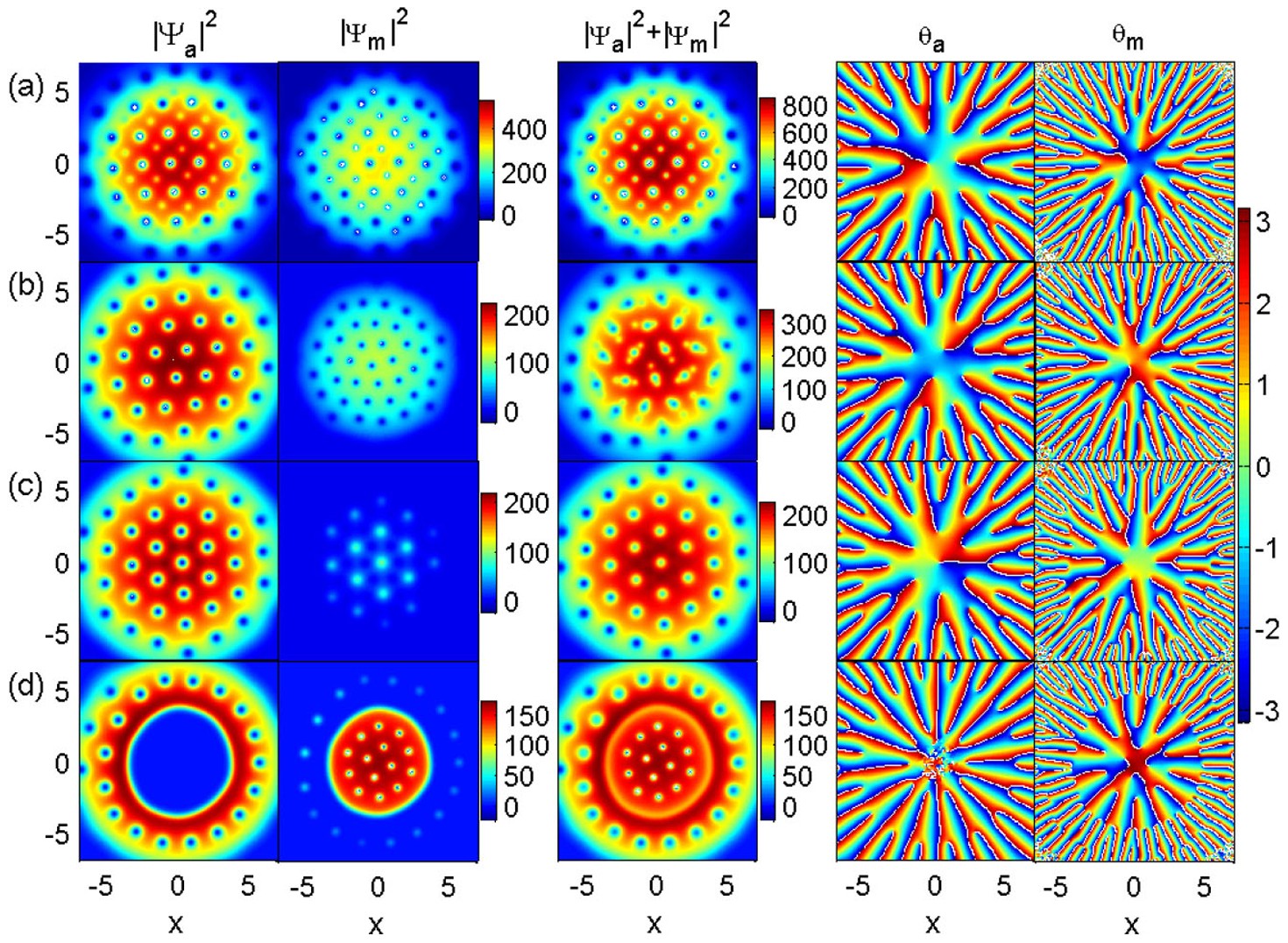
We have created vortices in two-component Bose-Einstein condensates. The vortex state was created through a coherent process involving the spatial and temporal control of interconversion between the two components. Using an interference technique, we map the phase of the vortex state to confirm that it possesses angular momentum. We can create vortices in either of the two components and have observed differences in the dynamics and stability…
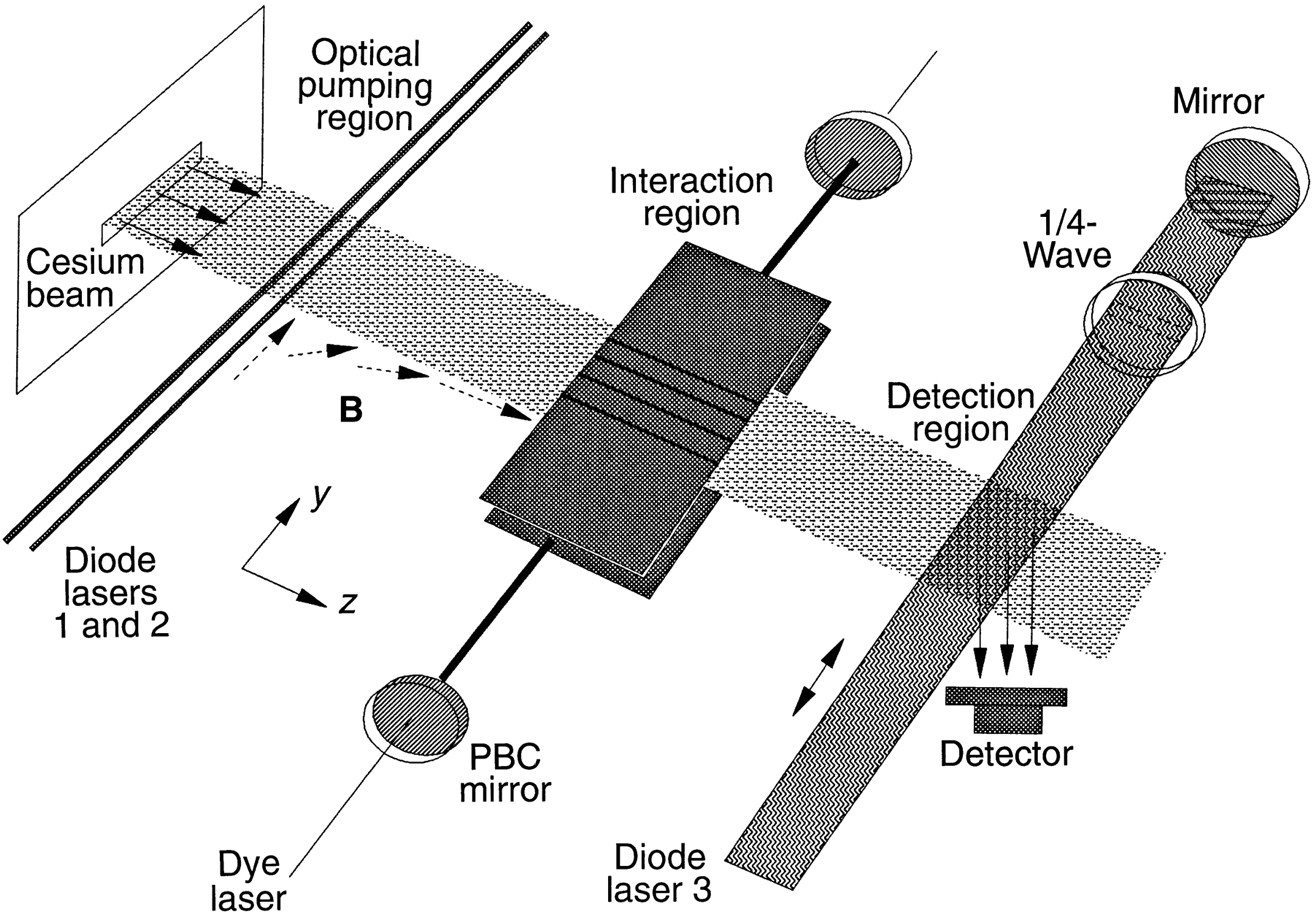
The amplitude of the parity-nonconserving transition between the 6S and 7S states of cesium was precisely measured with the use of a spin-polarized atomic beam. This measurement gives Im(E1pnc)/β = −1.5935(56) millivolts per centimeter and provides an improved test of the standard model at low energy, including a value for the S parameter of −1.3(3)exp (11)theory. The nuclear spin-dependent contribution…
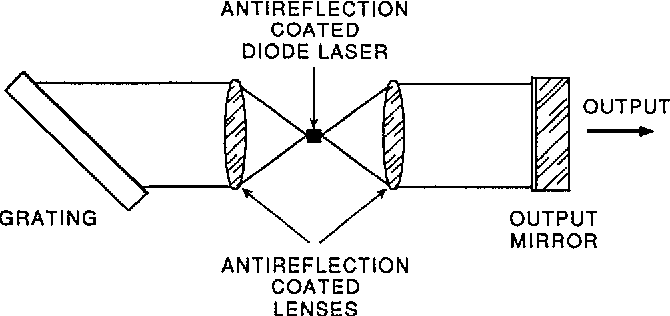
We present a review of the use of diode lasers in atomic physics with an extensive list of references. We discuss the relevant characteristics of diode lasers and explain how to purchase and use them. We also review the various techniques that have been used to control and narrow the spectral outputs of diode lasers. Finally we present a number of examples illustrating the use of diode lasers in atomic physics experiments…
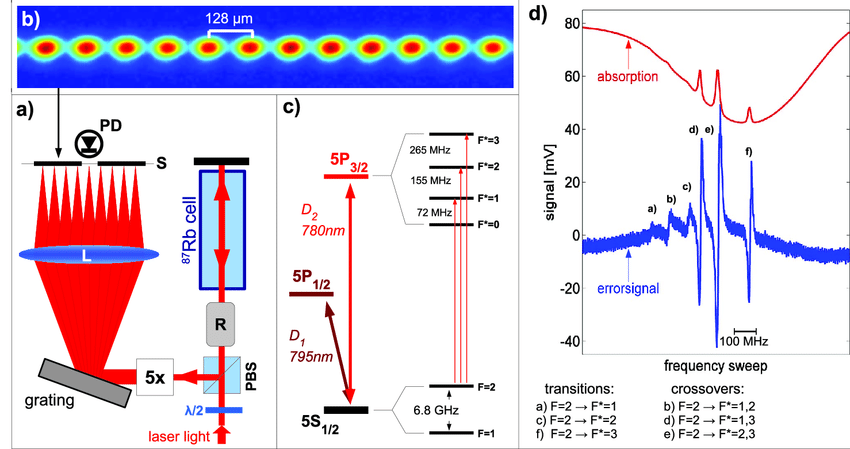
We have demonstrated a sensitive new method of Doppler-free spectroscopy, monitoring the nonlinear interaction of two monochromatic laser beams in an absorbing gas via changes in light polarization. The signal-to-background ratio can greatly surpass that of saturated absorption. Polarization spectra of the hydrogen Balmer-β line, recorded with a cw dye laser, reveal the Stark splitting of single fine-structure components in a Wood discharge…
"We should approach the teaching of science like a science … applying to science teaching the practices that are essential components of scientific research."
"An effective science education transforms how students think. More important than giving students facts and equations is teaching them the expert-like thinking of a scientist."
It was a very informative program. In this world where we only care about ourselves, the knowledge shared about happiness of others and the concept of Karma was very great!
N Nag
Participant
It is very good experience of mine I learned a lot of new things which teach me new things about life and academics related too.
S Das
Participant
It is very good experience in the talk. I learned a lot of new things which help me to improve myself.
A Koner
Participant
Very engaging for a student, especially at the current senario when everything makes sense at the same time nothing does.