
Voyage Through the Cosmos Lecture Series
Speakers
List of Speakers
John H. Schwarz
Theoretical Physicist, Caltech, USA
John Henry Schwarz is a titan of modern theoretical physics and the Harold Brown Professor of Theoretical Physics Emeritus at the California Institute of Technology (Caltech). Recognized universally as one of the founding fathers of String Theory, he demonstrated unparalleled intellectual courage by sustaining the field during the 1970s when it was largely abandoned by the scientific community. His visionary collaboration with Joël Scherk fundamentally redefined the discipline by proposing that string theory was not merely a model of nuclear forces, but a unified quantum theory of gravity, predicting the existence of the graviton within a consistent mathematical framework.
Schwarz’s most transformative contribution, the “First Superstring Revolution” of 1984, changed the course of physics history. Working with Michael Green, he proved the anomaly cancellation mechanism, demonstrating that superstring theory is free from the mathematical inconsistencies that plagued previous attempts at unification. This breakthrough established string theory as the premier candidate for a “Theory of Everything,” bridging Quantum Mechanics and General Relativity. A recipient of the MacArthur Fellowship, the Dirac Medal, and the Breakthrough Prize in Fundamental Physics, Schwarz’s legacy is etched into the fundamental understanding of the dimensionality and structure of the universe.
Andrei D. Linde
Stanford University, USA
Andrei Linde is the Emeritus Professor of Physics at Stanford University and one of the seminal architects of modern cosmology. He is the originator of the “Chaotic Inflation” theory, a paradigm-shifting framework that revolutionized our understanding of the Big Bang. Linde demonstrated that the exponential expansion of the early universe does not require fine-tuned initial conditions but arises naturally from the dynamics of scalar fields. His work corrected the fatal flaws of earlier models, firmly establishing inflation as the standard explanation for the uniformity and geometry of the observable cosmos.
Linde’s theoretical vision extends beyond a single universe to the concept of “Eternal Inflation,” which posits that the cosmos is a self-reproducing fractal Multiverse. He showed that quantum fluctuations in the inflationary field continuously spawn new, exponentially large parts of the universe, potentially with different physical laws. A recipient of the Fundamental Physics Prize, the Gruber Prize, the Kavli Prize, and the Dirac Medal, Linde’s contributions have fundamentally altered humanity’s conception of our world, providing a mechanism that explains the origin and the large-scale structure of the universe.
Timothy E. Eastman
(Formerly) Geophysical Institute,
University of Alaska, USA
Timothy E. Eastman (PhD physics/geophysics, University of Alaska 1979) is an independent researcher in plasma and space physics, and philosophy. His scholarly works have encompassed research and consulting in space physics, plasma applications, and space weather data systems since the 1970’s. In 1975 he discovered the low-latitude boundary layer of Earth’s magnetosphere and has since published over 100 research papers in space physics and related fields. While serving as a program officer at NASA (’85-’88) and the National Science Foundation, NSF (’91-’94), Dr. Eastman was co-coordinator for major interagency and international programs.
Concurrently, he carried out research in philosophy, publishing over 30 papers, and served as lead editor of Physics and Whitehead (SUNY, 2004) and Physics and Speculative Philosophy (de Gruyter, 2016). His current research is focused on a synthesis of recent developments in philosophy, physics, logic, semiotics, and process thought as articulated in his Untying the Gordian Knot: Process, Reality, and Context (Lexington, 2020), which contributes to a new natural philosophy for the 21st century. Dr. Eastman’s latest essays include “Triads as Primal” (Process Studies Supplements, 2023), and “Orders of Possibility and Actuality” (Pari Perspectives, Jan. 2025).
Mario Livio
(Formerly) Space Telescope Science Institute, Maryland, USA
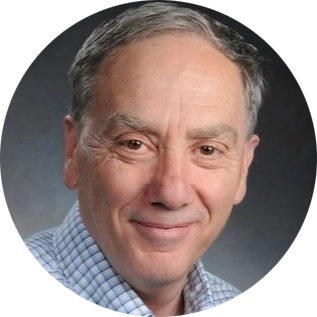
Mario Livio is a distinguished astrophysicist and best-selling author, formerly a senior astrophysicist at the Space Telescope Science Institute (STScI), the scientific operations center for the Hubble Space Telescope. His scientific research has produced seminal contributions to the theory of accretion disks, binary star evolution, Type Ia supernovae (which are the “standard candles” critical for measuring the expansion of the universe), and the search for life in the universe. Livio’s theoretical models have deepened humanity’s understanding of how compact objects like white dwarfs and black holes interact with their environments to produce the most energetic events in the cosmos, and the search for extraterrestrial life.
Beyond his technical achievements, Livio is a globally recognized intellectual who bridges the gap between hard science, mathematics, and philosophy. Through influential works such as The Golden Ratio and Brilliant Blunders, he explores the epistemic nature of discovery and the “unreasonable effectiveness” of mathematics in describing reality. A Fellow of the American Association for the Advancement of Science, Livio combines rigorous theoretical astrophysics with a profound capacity to articulate the beauty and complexity of the universe in a simple language.
Wendy L. Freedman
University of Chicago, USA
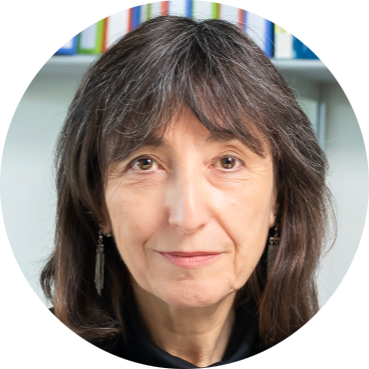
Wendy Freedman is the John & Marion Sullivan University Professor of Astronomy and Astrophysics at the University of Chicago and a towering figure in observational cosmology. She served as the principal investigator for the Hubble Space Telescope Key Project, leading a massive international team to resolve the decades-long controversy over the expansion rate of the universe. Her precise determination of the Hubble Constant ($H_0$) ended the “factor-of-two” uncertainty that plagued cosmology, providing the first accurate calculation of the universe’s age and serving as the observational anchor for the modern concordance model of Dark Energy.
A Fellow of the Royal Society and a recipient of the National Medal of Science, Freedman continues to define the frontier of precision astronomy. She is currently pioneering the use of the Tip of the Red Giant Branch (TRGB) method to resolve the “Hubble Tension,” a critical discrepancy that may hint at new physics beyond the standard model. As the founding leader of the Giant Magellan Telescope (GMT) project, Freedman is also instrumental in building the next generation of super-telescopes, ensuring her legacy will guide the future of cosmic discovery for decades to come.
Ofer Lahav
University College London, UK
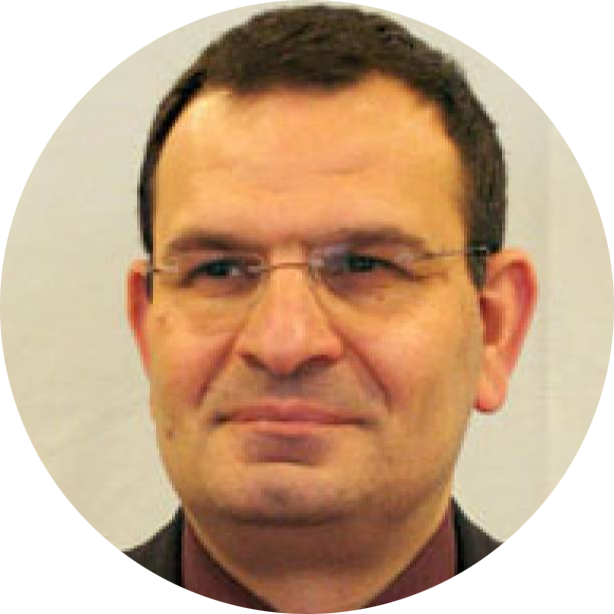
Ofer Lahav is a prominent Israeli-British cosmologist known for his influential work on dark energy, large-scale structure of the Universe, and observational cosmology. His research spans galaxy surveys, cosmological parameter estimation, and the statistical methods used to analyze the distribution of galaxies. Lahav has played a key role in major international collaborations that map the cosmos and study how cosmic structures evolve over time.
He is a Professor of Astronomy and former Head of the Astrophysics Group at University College London (UCL). Lahav has also served in leadership roles in large surveys such as the Dark Energy Survey (DES), contributing to efforts to better understand the nature of dark energy and the overall geometry of the Universe. Known for bridging theory, observation, and data science, Lahav is widely regarded as one of the leading figures in contemporary cosmology.

Louis Marmet
York University, Canada
Louis Marmet is Adjunct Professor of Physics at York University in Toronto. He studies light– matter interactions and their importance in our interpretation of astrophysical phenomena. Marmet obtained his Ph.D. in physics from the University of Toronto with specialization in experimental quantum optics. As an Alexander von Humboldt fellow at the Ludwig Maximilian University of Munich, he conducted research on quantum chaos in atomic systems. His career at the National Research Council, Canada, focused on high-precision atomic clocks and laser-cooling of atoms to microkelvin temperatures. Marmet is currently collaborating with a group at York University on an experiment that uses an atom interferometer sensitive enough to detect laser-heating from a single-photon interaction.
Prof. Marmet’s passion for physics appeared at an early age, inspired by his father, who was also a physicist and introduced him to the principles of measurement, inquiry, and a profound desire to understand the world. His interests led him to a broad range of activities that include amateur astronomy, photography, mathematical modeling, philosophy of science, and astrophysics. These diverse skills are key for perceiving nature with a distinct clarity, as he recognizes that illusions pose a constant challenge to knowledge. This unique lens is especially important in cosmology, a discipline at the intersection of science and philosophy. Marmet believes his perspectives can offer a fresh understanding of the universe we inhabit. Since 2018, he has been facilitating a discussion group focused on cosmology, fostering dialogue and exploration of these themes.
Frank J. Tipler
Tulane University, USA
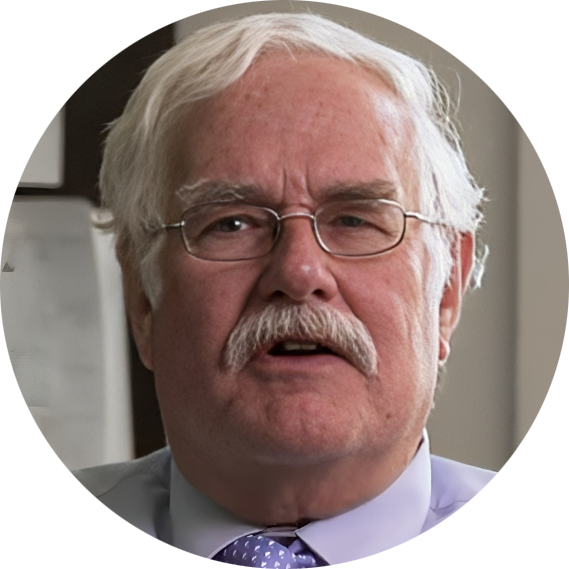
Frank J. Tipler is an American mathematical physicist known for his work in general relativity, cosmology, and global properties of spacetime. Early in his career, Tipler made significant contributions to the theory of closed timelike curvesand the physics of rotating (Kerr) black holes, exploring whether the laws of general relativity allow for time travel. He also co-authored the influential textbook The Anthropic Cosmological Principle with John Barrow, which examined how the Universe’s physical laws relate to the existence of life.
Tipler is a professor of mathematical physics at Tulane University, where his work increasingly turned toward highly speculative ideas, including the Omega Point Theory, which attempts to unify physics, cosmology, and concepts related to ultimate cosmic evolution. Although many of his later claims remain controversial and widely debated, Tipler is recognized for his earlier rigorous contributions to gravitational physics and his role in stimulating discussion at the boundary of physics, philosophy, and cosmology.
Manoranjan Sinha
IIT Kharagpur, India
Manoranjan Sinha is a senior faculty member in the Department of Aerospace Engineering at the Indian Institute of Technology (IIT) Kharagpur. His academic work spans areas such as flight dynamics, control systems, aerodynamics, and aerospace vehicle design. With extensive teaching and research experience, he has contributed to training generations of aerospace engineers and guiding research in both theoretical and applied aspects of aeronautical engineering.
At IIT Kharagpur, Prof. Sinha has been involved in various academic, research, and departmental initiatives, including supervision of postgraduate research, development of aerospace laboratories, and collaboration on aerospace technology projects. His work emphasizes rigorous engineering fundamentals and innovative approaches to solving problems related to aircraft performance, stability, and control.
David Dilworth
US Naval Postgraduate School, USA
David J. Dilworth studied cosmology at the US Naval Postgraduate School in Monterey, California, by invitation of Emeritus Prof. Karlheinz ‘Kai’ Wohler, who had previously assisted his professor, the renowned physicist Werner Heisenberg. David humorously points out that this makes him Heisenberg’s ‘grand-student.’ His superpower is the ability to translate complex and obscure cosmology into plain English, which is likely why his award-winning website, CosmologyScience.com, was ranked #1 in web searches for ‘Best Cosmology Blog’ for 10 years.
David’s goal in publishing his work on cosmology and philosophy is to remind us of the minimum criteria required for a claim to have scientific value—specifically, the clear distinctions between hypothesis and conjecture, and separately, between a scientific theory and non-scientific claims. He is currently finishing a paper that solves Philosophy of Science’s enigmatic Demarcation Problem and is preparing to offer it for publication this year.
Dilworth is a prominent figure in the ‘Alternative Cosmology’ community and the founder of Science Based Cosmology. His ‘Glossary of Cosmology Principles’ and ‘Cosmology Hypothesis Application Form’ are widely used and popular tools among cosmology students. Based on his extensive analysis of logical and observational anomalies, he questions many fundamental aspects of the Big Bang model, noting that its primary supports—such as universe expansion, cosmic microwave background radiation, and dark matter—lack direct empirical verification, rely on logical fallacies, or contradict foundational physics. Dilworth advocates avoiding logical fallacies and returning to empirically validated physical principles in cosmology, which naturally leads to static, ‘Simmering Universe’ explanations.
Avi Loeb
Harvard University, USA
Avi Loeb is the Frank B. Baird Jr. Professor of Science at Harvard University and the founding director of Harvard’s Black Hole Initiative. A prolific theoretical physicist with over 1,000 scientific papers, Loeb has made fundamental contributions to the understanding of the first stars, the epoch of reionization, and the dynamics of black holes. He is the Chair of the Advisory Committee for the Breakthrough Starshot initiative, leading the engineering effort to develop light-sail technology capable of propelling nanocraft to the nearest star system at relativistic speeds.
Loeb is globally renowned for his bold advocacy of “Extraterrestrial Archaeology,” arguing that science must empirically investigate anomalies that suggest alien technology. His analysis of the interstellar object ‘Oumuamua, positing it as a potential artificial light sail due to its anomalous non-gravitational acceleration, challenged the conservatism of the scientific community and sparked a global conversation on the prevalence of intelligent life. As the head of the Galileo Project, Loeb is currently leading the first systematic, high-resolution scientific search for extraterrestrial artifacts near Earth, rigorously applying the scientific method to the search for cosmic intelligence.
Luke A. Barnes
Western Sydney University, Australia
Luke Barnes is a physicist at Western Sydney University. He researches in the fields of galaxy formation and cosmological fine-tuning. Holding a Ph.D. from the University of Cambridge, Barnes utilizes numerical simulations to explore the evolution of matter in the cosmos. He is widely recognized for his work on the “Fine-Tuning of the Universe for Life,” investigating how minute variations in the fundamental constants of physics would render the universe uninhabitable. Dr. Luke Barnes and Prof. Geraint Lewis are the authors of “The Cosmic Revolutionary’s Handbook (Or: How to Beat the Big Bang)” and “A Fortunate Universe: Life in a Finely Tuned Cosmos”, with Cambridge University Press.
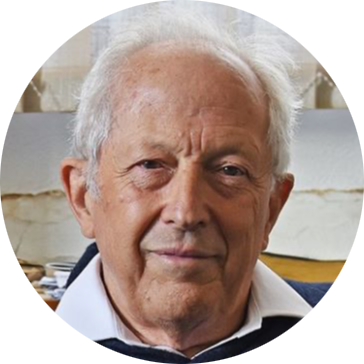
George F. R. Ellis
University of Cape Town, South Africa
George Ellis is the Emeritus Distinguished Professor of Complex Systems at the University of Cape Town and one of the world’s leading theorists in cosmology and general relativity. He is the co-author, alongside Stephen Hawking, of the seminal monograph The Large Scale Structure of Space-Time, which established the rigorous mathematical foundations for understanding black holes, singularities, and the causal geometry of the universe. A Fellow of the Royal Society and past President of the International Society on General Relativity and Gravitation, Ellis has been instrumental in defining the physical laws that govern the cosmos.
Beyond his contributions to physics, Ellis is a profound thinker and deeply questions the validity of reductionistic framework with his theory of “Top-Down Causation.” He demonstrates how complex systems, including the human brain, can causally influence underlying physical matter, providing a scientific framework for understanding agency and ethics. A recipient of the Templeton Prize and the Order of Mapungubwe from the South African government, Ellis is a leading moral voice in science, advocating for the synthesis of rigorous empiricism with a deep appreciation for the philosophical and ethical dimensions of human existence.

Sandra M. Faber
University of California, USA
Sandra M. Faber is a distinguished astrophysicist and Professor Emerita at the University of California, Santa Cruz, renowned for her pioneering work on the formation and evolution of galaxies. She earned her Ph.D. from Harvard University and has been a key figure at the UCO/Lick Observatory. Faber is widely known for the Faber–Jackson relation, which revolutionized the understanding of elliptical galaxies, as well as her major contributions to the study of dark matter, galaxy clustering, and cosmological structure formation.
Throughout her illustrious career, Faber has played a central role in major astronomical projects, including the development of the Keck Telescopes and large-scale galaxy surveys. She has received several top honors, such as the National Medal of Science, for her profound impact on observational cosmology. A respected leader, mentor, and communicator, she continues to influence the field through her research, advisory roles, and efforts to make astronomy accessible to the broader public.
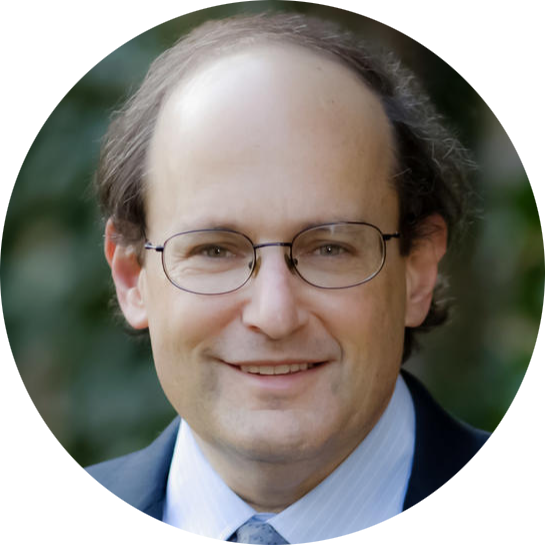
Paul J. Steinhardt
Princeton University, USA
Paul J. Steinhardt is the Albert Einstein Professor in Science at Princeton University and a visionary theoretical physicist who has fundamentally reshaped two distinct fields of science: cosmology and condensed matter physics. As one of the original architects of “New Inflation,” he helped establish the standard model of the early universe, and later proposed the revolutionary “Bouncing Model of Cosmology.” This bold paradigm posits that the universe undergoes eternal cycles of expansion and contraction driven by brane collisions in higher dimensions, offering a mathematically consistent alternative to the Big Bang that resolves the predictive paradoxes of the multiverse.
Steinhardt is equally renowned for redefining the concept of matter through his discovery of “Quasicrystals”—ordered materials with forbidden symmetries previously thought impossible by the laws of crystallography. His scientific tenacity led him to organize a daring expedition to the Russian tundra, where he proved the natural existence of these exotic structures in ancient meteorites. A recipient of the Dirac Medal and the Oliver E. Buckley Prize, Steinhardt’s work stands as a testament to scientific rigor, bridging the gap between the abstract geometry of the cosmos and the tangible atomic structure of solids.
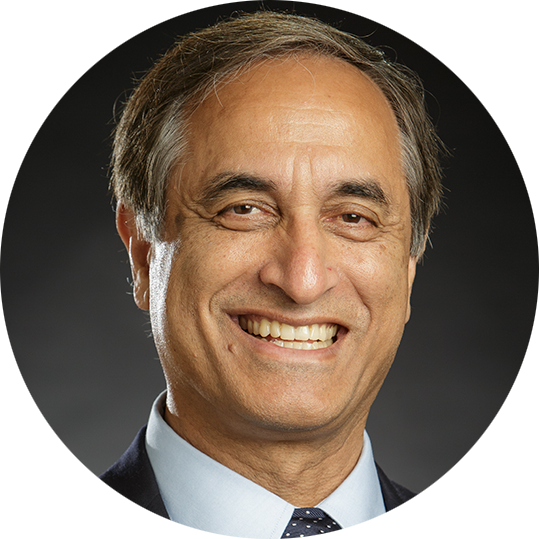
Subhash Kak
Oklahoma State University, USA
Subhash Kak is Regents Professor of Electrical and Computer Engineering at Oklahoma State University, USA, and a renowned scholar in the fields of quantum information, artificial intelligence, and the history of science. He is widely known for the Kak–Chung quantum key distribution protocol and his pioneering contributions to neural networks, cryptography, and machine learning. His academic career spans several decades, with influential research that bridges modern technology and ancient knowledge systems.
Alongside his scientific achievements, Kak is also a respected historian of Indian science, authoring numerous books and articles on Vedic studies, philosophy of mind, and cultural history. His interdisciplinary work explores the connections between consciousness, cosmology, and scientific thought, making him a prominent voice in discussions on science and spirituality. He has received multiple awards, delivered prestigious lectures worldwide, and continues to influence both technical and philosophical scholarship.
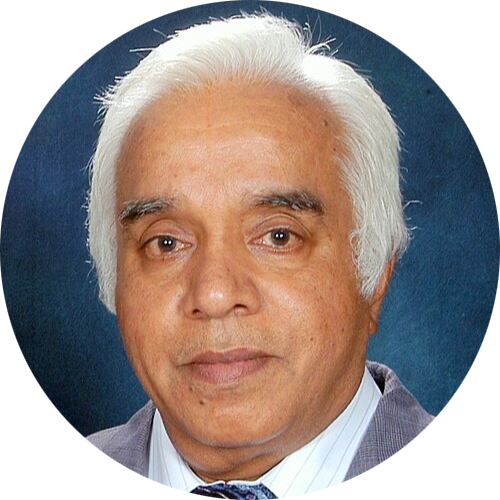
R. N. Iyengar
Jain University, India
R. N. Iyengar (b. 1943) is renowned for his contributions to Earthquake Engineering, Random Vibrations, Mathematical Modelling, and Natural Sciences in Sanskrit. As faculty at the Indian Institute of Science from 1969 till his retirement in 2005 as KSIDC Chair Professor, Iyengar published over 200 technical papers, reports, general articles and books. He was Distinguished Schmidt Chair Professor, FAU, USA (1995) and Director CSIR-CBRI (1994-2000). He is currently Distinguished Emeritus Professor at the Jain University, Bangalore.
Iyengar received initial training in Sanskrit studies in the traditional way. This made him an avid reader of ancient texts in the original. He has developed, combining Indic intellectual traditions with modern methods, a new line of study of Indian knowledge systems. His findings on comets, eclipses, earthquakes, ancient geography, Pole Star Dhruva in Vedic literature, concept of Probability in classical music, have attracted worldwide attention. He brought out the Parāśaratantra, an ancient Sanskrit treatise on astronomy and natural sciences, with text, translation and notes in 2013. He edited in 2018 Nāradaśilpam, a medieval prose text on Architectural Civil Engineering from three manuscripts with translation and notes. He is presently critically editing the Vṛddhagārgīya Samhitā a large corpus of manuscripts on astral sciences. A part of this corpus namely, Mahāsalilam published in 2024 is the most ancient Vedāṅga text on astronomy and astrology.
Fellowships and honours of RN Iyengar include, FNAE, FASc, FNASI, FAvH Foundation, Raja Ramanna Fellow. Visvesvaraya Award (1996); Technology Day Award (2001); Vasvik Award (2013); Saraswati Samman of Central Sanskrit University (2024); Śāstra Mahāmana Award (2026).

M S Sriram
Prof. K.V. Sarma Research Foundation, India
M. S. Sriram — Mayasandra Subrahmanya Sriram (born 1950) is an Indian physicist and scholar of the history of science, particularly Indian astronomy and mathematics. He served as Professor and Head of the Department of Theoretical Physics at the University of Madras, Chennai, where he taught for around three decades before retirement; during his academic career he worked in theoretical physics and later developed deep research interests in the historical development of Indian scientific thought.
He is the President of the Prof. K. V. Sarma Research Foundation in Chennai, a centre dedicated to preserving and studying ancient Indian scientific and mathematical manuscripts and traditions. Sriram’s work bridges modern physics and historical scholarship, and he has contributed to research and publications on classical Indian astronomy and mathematics, including critical studies and editions of traditional texts.
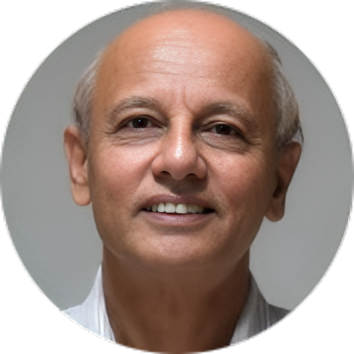
Pankaj Joshi
International Center for Space & Cosmology, India
Pankaj S. Joshi is an eminent Indian physicist and cosmologist, and a leading authority in general relativity, gravitation, and cosmology. He is currently Distinguished Professor of Physics and Founding Director of the International Centre for Space & Cosmology at Ahmedabad University in Gujarat, where he leads research, training, and public engagement in fundamental questions about the universe. Before joining Ahmedabad University, Prof. Joshi was a Senior Professor in the Department of Astronomy & Astrophysics at the Tata Institute of Fundamental Research (TIFR), Mumbai, where he carved an international reputation for his work on the gravitational collapse of massive stars and the nature of spacetime singularities — including insights into black holes and the possibility of naked singularities. His research has been published in more than 200 peer-reviewed papers and major monographs from Oxford and Cambridge University Press.
Invited by Stephen Hawking to work at Cambridge University under a Nuffield Foundation Fellowship early in his career, Prof. Joshi has also held visiting positions at top institutions across the UK, USA, Japan, Spain, South Africa, and Italy. He is a Fellow of leading scientific academies and a recipient of prestigious awards including the INSA-Vainu Bappu Memorial Award. Prof. Joshi’s contributions span deep theoretical advances and wider science outreach, making him one of India’s most respected figures in theoretical physics and cosmology.

Annapurni Subramaniam
Indian Institute of Astrophysics, India
Annapurni Subramaniam — is an Indian observational astronomer and currently Director & Senior Professor at the Indian Institute of Astrophysics in Bengaluru, India, where she leads scientific research and institutional initiatives in astronomy and astrophysics. She has over three decades of research experience and has published around 175 scientific papers on subjects including star clusters, stellar populations, galaxies and ultraviolet astronomy. Prof. Subramaniam earned her Ph.D. in astronomy from the Indian Institute of Astrophysics in 1996 and has played key roles in major space and ground-based projects, notably serving as calibration scientist for the Ultra-Violet Imaging Telescope (UVIT) aboard India’s AstroSat space observatory and contributing to the international Thirty Meter Telescope (TMT) initiative.
A recognized leader in her field, she has guided many students to doctoral research, is a Fellow of the Indian Academy of Sciences and the National Academy of Sciences, India, and holds editorial and committee roles in major astronomy journals and the International Astronomical Union. In 2024 she received the Rashtriya Vigyan Puraskar (Vigyan Shri)for her contributions to space science and technology.
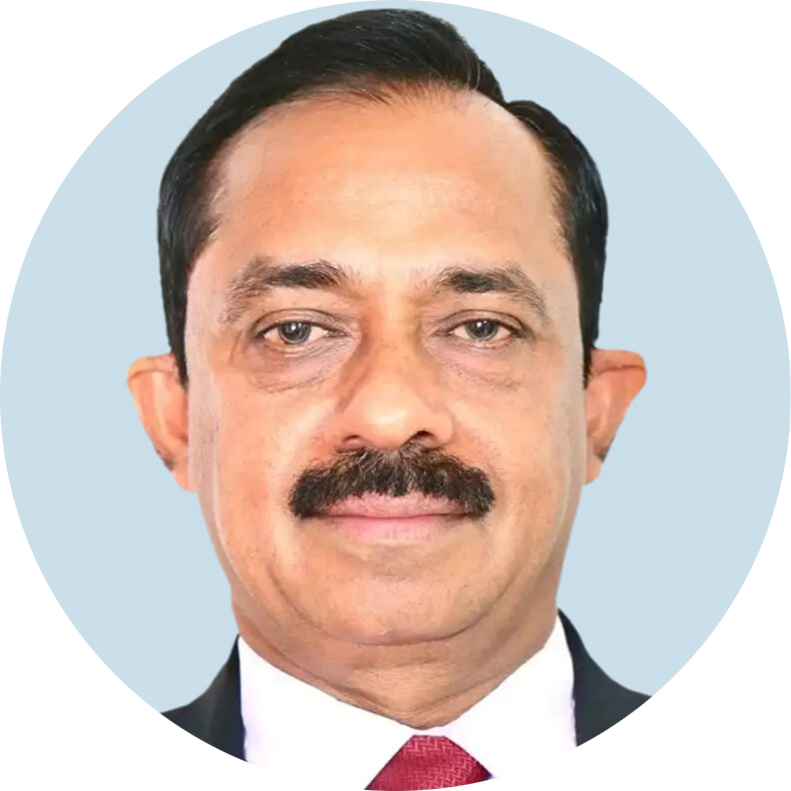
A. K. Anil Kumar
ISRO Telemetry Tracking and Command Network (ISTRAC), India
A. K. Anil Kumar is a senior Indian Space Research Organisation (ISRO) scientist and the Director of the ISRO Telemetry, Tracking and Command Network (ISTRAC) in Bengaluru, where he leads the organisation’s ground-segment activities for telemetry, tracking, command and mission operations support for ISRO’s satellite and launch vehicle missions. Dr. Anil Kumar has had a distinguished career at ISRO, holding key positions including Associate Director of ISTRAC, Director of the Directorate of Space Situational Awareness and Management at ISRO Headquarters, and Head of the Applied Mathematics Division at the Vikram Sarabhai Space Centre. He has been Project Director for NETRA, a national initiative to establish a network of radars and optical telescopes for space object tracking, and led development of the IS4OM system for safe and sustainable space operations management.
An accomplished researcher, Dr. Anil Kumar has authored numerous peer-reviewed journal and conference publications and a book on space debris research, and has represented India in international forums including the International Astronautical Federation (IAF) — where he has served as Vice-President — and United Nations space committees. He holds master’s degrees in mathematics and aerospace engineering and a Ph.D. in aerospace engineering from the Indian Institute of Science in Bengaluru, and is a Fellow of the Indian National Academy of Engineering.
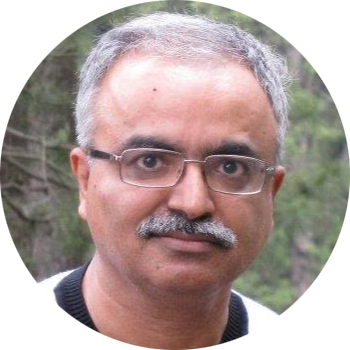
Tejinder Pal Singh
Ex-Professor, Tata Institute of Fundamental Research (TIFR), Mumbai & Visiting Professor, IUCAA
Tejinder Pal Singh is a distinguished theoretical physicist formerly with the Tata Institute of Fundamental Research, renowned for his work on quantum foundations, gravitation, and cosmology. He earned his Ph.D. from TIFR in 1989 and subsequently held postdoctoral and visiting positions, including at the Inter-University Centre for Astronomy and Astrophysics. Over a career spanning more than three decades, he progressed through various academic roles at TIFR, contributing significantly to research and mentoring in high-energy physics and quantum theory.
His research focuses on developing deeper connections between quantum mechanics and gravity, with notable work on spontaneous wave-function collapse models, quantum-to-classical transitions, quantum interference in time, and generalized theories of gravity. Prof. Singh has also contributed to studies of cosmological constant problems, dark energy, gravitational collapse, and torsion-based gravity theories. Widely respected for his conceptual clarity and theoretical insight, he continues to be active in advancing foundational questions in modern physics.