
AISSQ 2026
Speakers
List of Speakers
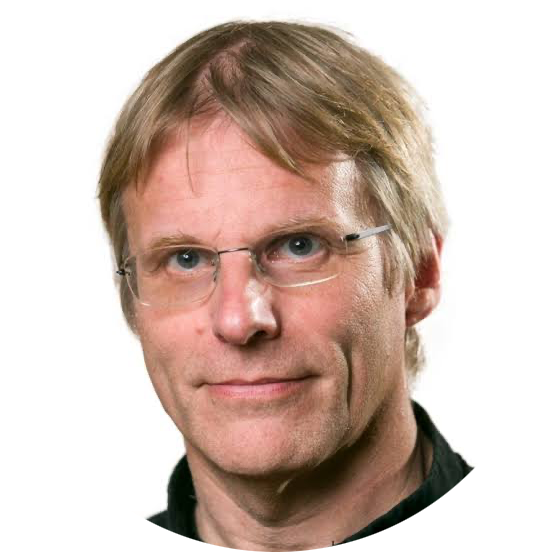
Prof. Giulio Tononi
University of Wisconsin-Madison, USA
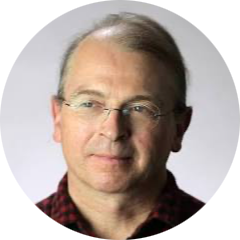
Prof. Seth Lloyd
Massachusetts Institute of Technology, USA
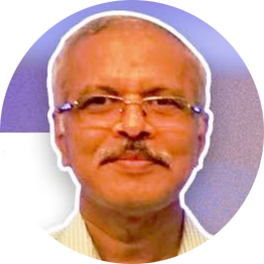
Prof. Venkappaya R. Desai
IIT Dharwad, India

Prof. Sisir Roy
NIAS Bangalore, India
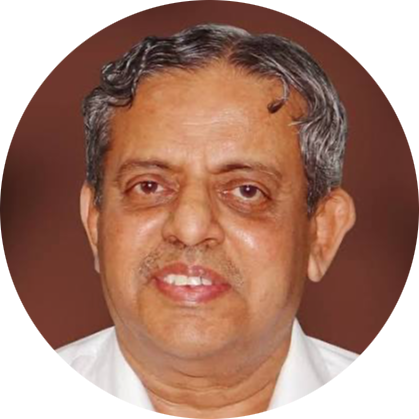
Dr. H.R. Nagendra
S-VYASA University, India
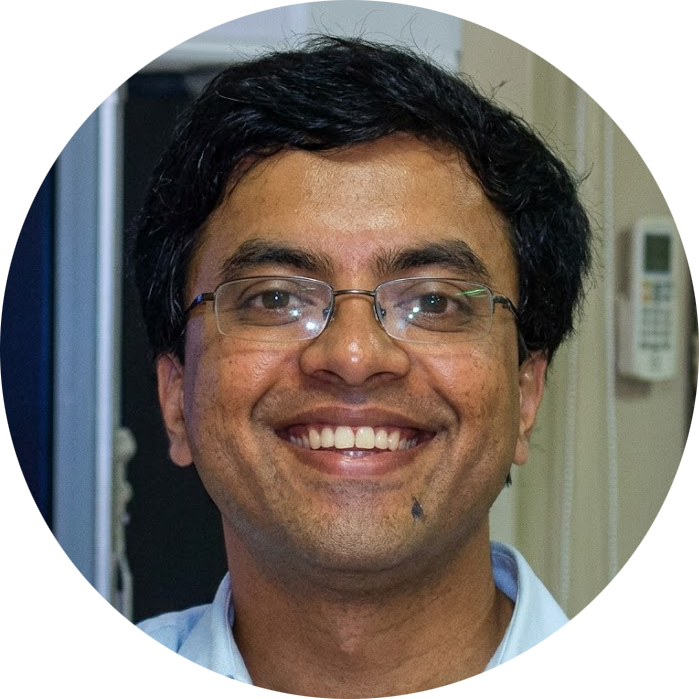
Dr. P. N. Ravindra
NIMHANS Bangalore, India
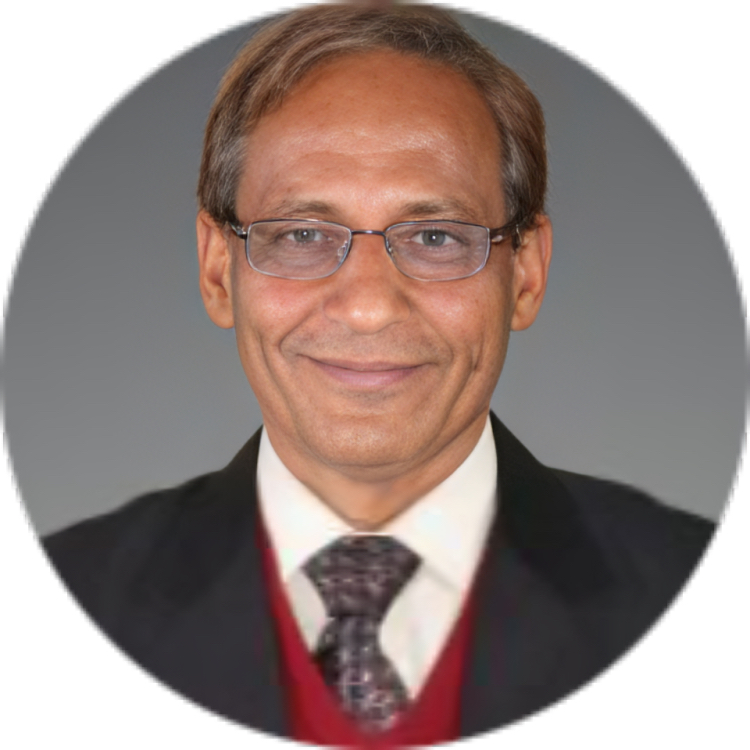
Prof. P. K. Singh
IT (BHU) Varanasi, India

Prof. Hare Krishna Mohanta
BITS Pilani, India
Prof. Debashis Khan
IIT (BHU) Varanasi, India
and many more…
Prof. Giulio Tononi
University of Wisconsin-Madison, USA
Prof. Giulio Tononi is a renowned neuroscientist and psychiatrist who serves as a Professor of Psychiatry, the David P. White Chair in Sleep Medicine, and the Distinguished Chair in Consciousness Science at the University of Wisconsin–Madison.He obtained his medical degree with a specialization in psychiatry from the University of Pisa, Italy, and earned a Ph.D. in neurobiology/neuroscience from the Sant’Anna School of Advanced Studies. Prior to joining the faculty at UW–Madison, he conducted extensive neuroscientific research as a member of The Neurosciences Institute in New York and San Diego.
He is internationally recognized for formulating Integrated Information Theory (IIT), a prominent mathematical and physical framework proposed in 2004 that seeks to define and measure the nature of consciousness. Alongside his pioneering theoretical work on consciousness, Dr. Tononi is a leading authority on sleep science, where his research utilizes high-density EEG, genomics, and computer models to investigate sleep regulation, sleep function, and memory consolidation. His influential publications include A Universe of Consciousness (co-authored with Nobel laureate Gerald Edelman) and PHI: A Voyage from the Brain to the Soul.
Prof. Seth Lloyd
Massachusetts Institute of Technology, USA
Prof. Seth Lloyd is a pioneer in quantum information science and a Professor of Mechanical Engineering at the Massachusetts Institute of Technology (MIT). He completed his undergraduate studies in physics at Harvard University, followed by graduate degrees at Cambridge University, and earned his Ph.D. in physics from Rockefeller University in 1988. After completing postdoctoral fellowships at Caltech and the Los Alamos National Laboratory, he joined the MIT faculty in 1994, where he also serves as a principal investigator at the Research Laboratory of Electronics and leads the Center for Extreme Quantum Information Theory.
Renowned for calling himself a “quantum mechanic,” Professor Lloyd proposed the first technologically feasible design for a digital quantum computer and proved Richard Feynman’s conjecture on efficient quantum simulations. His research spans quantum error correction, quantum machine learning algorithms, quantum metrology, and complex adaptive systems. Beyond his academic papers, he gained widespread public recognition as the author of Programming the Universe (2006), in which he argues that physical systems inherently process information and that the cosmos itself functions as a vast quantum computer.
Prof. Venkappaya R. Desai
IIT Dharwad, India
Prof. Venkappayya R. Desai is an eminent academician and administrator currently serving as the Director of the Indian Institute of Technology Dharwad (IIT Dharwad). A civil engineer by training, he completed his Ph.D. in Civil Engineering from Clemson University, USA, and went on to build a distinguished career spanning over three decades in higher education. Before assuming leadership at IIT Dharwad, Prof. Desai spent more than two decades at IIT Kharagpur, where he served as a Professor in the Department of Civil Engineering and held major administrative positions, including Dean of the Faculty of Engineering and Architecture.
His core research and professional expertise focus on water resources engineering, integrated watershed management, flood and drought mitigation, green infrastructure, and sustainable facilities in water and energy. Beyond his technical domain, Prof. Desai is a strong proponent of incorporating Indian Knowledge Systems (IKS) into environmental conservation, particularly regarding traditional water management and afforestation practices. Throughout his administrative tenure, he has served on key governing bodies and academic councils across India, playing an instrumental role in institutional planning, policy-making, and advancing technical education.
Prof. Sisir Roy
NIAS Bangalore, India
Prof. Sisir Roy is a theoretical physicist, academician, and Senior Homi Bhabha Fellow serving as a Visiting Professor at the National Institute of Advanced Studies (NIAS), IISc Campus, Bengaluru. He earned his Ph.D. in theoretical physics from the Indian Statistical Institute (ISI), Kolkata, in 1979. Prior to joining NIAS, he had a distinguished career spanning over three decades as a Professor in the Physics and Applied Mathematics Unit at ISI Kolkata, as well as serving as the T. V. Raman Pai Chair Professor at NIAS.
His research spans the foundations of quantum mechanics, cosmology, quasar astronomy, brain function modeling, and cognitive science. At NIAS, Prof. Roy’s interdisciplinary work bridges modern physics and ancient Indian knowledge traditions, with a focus on neural correlates of meditation states, mathematical models of microbial communication, and decision-making mechanisms. He has published over 170 research papers in peer-reviewed journals alongside 13 research monographs and edited volumes.
Dr. H.R. Nagendra
S-VYASA University, India
Dr. Hongasandra Rama Rao Nagendra (Dr. H. R. Nagendra) is a distinguished yoga researcher, academician, and mechanical engineer who currently serves as the Chancellor and leader of Swami Vivekananda Yoga Anusandhana Samsthana (S-VYASA), a premier Deemed-to-be University dedicated to yoga research and therapy in Bengaluru. Born in 1943 in Karnataka, he earned his doctorate in mechanical engineering from the prestigious Indian Institute of Science (IISc), Bengaluru. Before transitioning full-time into yoga sciences, he built an impressive technical career abroad as a post-doctoral research associate at NASA’s Marshall Space Flight Center, a post-doctoral fellow at the University of British Columbia, and a consultant at Harvard University’s Engineering Sciences Laboratory.
In 1975, Dr. Nagendra pivoted from engineering to “human engineering,” dedicating his life to scientific research on yoga therapy and holistic health. He played a foundational role in establishing S-VYASA, serving as its President and later as its founding Vice-Chancellor before stepping into the Chancellor role. Pioneering techniques such as Cyclic Meditation, he has authored over 35 books and more than 100 research papers exploring yoga’s therapeutic benefits for chronic and lifestyle-related ailments. A prominent leader in national and international yoga policy, he chaired the committee for the International Day of Yoga celebrations in 2015 and was awarded the Padma Shri—India’s fourth-highest civilian honor—in 2016 for his seminal contributions to yoga and society.
Dr. P. N. Ravindra
NIMHANS Bangalore, India
Dr. P. N. Ravindra is an esteemed neurophysiologist and researcher currently serving as an Additional Professor in the Department of Neurophysiology and the Center for Consciousness Studies at the National Institute of Mental Health and Neuro Sciences (NIMHANS), Bengaluru. He holds an MD and a Ph.D. in Neurophysiology from NIMHANS. His clinical and academic expertise centers on neurophysiology, sleep disorders medicine, electroencephalography (EEG), polysomnography, and the physiological effects of contemplative practices.
Dr. Ravindra’s research explores the neural mechanisms of consciousness, meditation traditions (such as Vipassana, Mindfulness, and Isha Yoga), and sleep regulation. He has published extensively on how yogic breathing, meditation, and sleep architecture influence autonomic functions, cognitive flexibility, and mental well-being. Through his teaching, clinical research, and collaborative projects, he continues to play a vital role in bridging Indian knowledge traditions like yoga with modern cognitive and affective neuroscience.
Prof. P. K. Singh
IIT (BHU) Varanasi, India
Prof. Prabhat Kumar Singh (P. K. Singh) is a Higher Administrative Grade (HAG) Professor in the Department of Civil Engineering at the Indian Institute of Technology (BHU), Varanasi. He holds a B.E. in Civil Engineering from Aligarh Muslim University, an M.E. in Environmental Engineering from the University of Roorkee (now IIT Roorkee), and earned his Ph.D. in Civil Engineering from IIT Kanpur. Over a career spanning several decades, he has established himself as a leading voice in environmental engineering, having served in various academic, research, and administrative capacities at IIT (BHU), including heading the Civil Engineering Department.
His primary research focuses on environmental engineering, water resource management, wastewater treatment, and river health assessment, with a special emphasis on the restoration and water quality monitoring of the River Ganga. Prof. Singh has spearheaded numerous research initiatives on emerging pollutants, smart city water management, and groundwater contamination. Beyond his academic and published research contributions, he actively serves on national academic councils, professional bodies, and advisory panels shaping technical education and environmental policy in India.
Prof. Hare Krishna Mohanta
BITS Pilani, India
Prof. Hare Krishna Mohanta (H. K. Mohanta) is an academician and researcher currently serving in the Department of Chemical Engineering at BITS Pilani, Pilani Campus. He obtained his B.E. in Chemical Engineering from NIT Rourkela (formerly REC Rourkela) in 1995, followed by an M.Tech. in Chemical Engineering from IIT Kanpur in 1998, and earned his Ph.D. in Chemical Engineering with a focus on Process Control from BITS Pilani in 2006. Over a career spanning more than two decades at BITS Pilani, he has advanced through various academic roles, having joined the institute as an Assistant Lecturer in 1998.
His primary research interests lie in advanced process control, process monitoring, control theory, fuzzy logic control, and applied wavelet analysis. In addition to his academic research and teaching, Prof. Mohanta holds life memberships in professional organizations such as the Indian Institute of Chemical Engineers (IIChE) and the Institution of Engineers (India). He has also been active in interdisciplinary initiatives exploring the synthesis of science and contemplative thought.
Prof. Debashis Khan
IIT (BHU) Varanasi, India
Prof. Debashis Khan is a distinguished professor in the Department of Mechanical Engineering at the Indian Institute of Technology (BHU), Varanasi. He completed his M.Tech. from Regional Engineering College (now National Institute of Technology), Durgapur before embarking on an extensive academic career dedicated to solid mechanics and advanced engineering research. Over his long tenure at IIT (BHU), he has held key departmental responsibilities while mentoring numerous undergraduate, postgraduate, and doctoral scholars.
His core areas of research expertise include solid mechanics, fracture mechanics, continuum mechanics, finite deformation plasticity, damage mechanics, and finite element modeling. Prof. Khan’s work focuses on predicting structural failure and analyzing crack-tip fields, mechanical behaviors of composites, and failure mechanisms in advanced engineering and biomaterials. He has published extensively in peer-reviewed journals and contributed to major research projects supported by national funding agencies.